Most founders prepare for the transaction. Very few prepare for what the transaction changes.
The confusion, loss of structure, and quiet drift that follow a successful exit rarely show up in spreadsheets. They show up later, when the business is gone and nothing has replaced it yet.
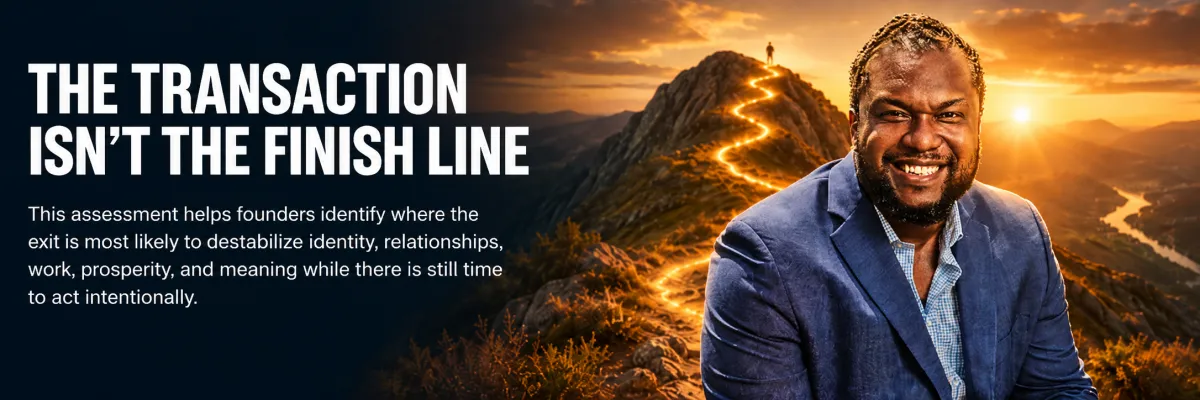
This private assessment helps you identify where the exit is most likely to destabilize you while you still have the ability to act intentionally.
Takes 10 minutes. Private. No confidential financials required. No obligation.
This is not a quiz. It does not evaluate your competence, preparedness, or success. It gives you orientation.
Founders use this assessment to see where the exit may create friction across vision, finances, operations, relationships, resilience, legacy, and post-exit structure before those risks become harder to correct.
If you would rather understand what you are exiting to with your current strategy, this will be useful.
Discover how prepared you are for your transition with our Exit Readiness Assessment. This tool evaluates key areas of your exit strategy, helping you gain the clarity and confidence needed to move forward with purpose and fulfillment.
What the Exit Readiness Assessment Reveals
This assessment is designed to surface risk, not reassurance.
Embarking on an exit from your business is one of the most significant transitions you will experience as an entrepreneur.
Our comprehensive Exit Readiness Assessment is designed to measure your preparedness across key areas, ensuring you can move forward with confidence, clarity, and a sense of fulfillment.
Most founders exit believing the hard part is over.
In reality, the transaction removes structure faster than it creates clarity.
This assessment helps you see:
Where your identity may be too tightly bound to the business
Where financial assumptions could create future pressure or re-entry risk
Where the company may still depend on you more than you realize
Where relationships may be misaligned heading into the transition
Where legacy and contribution are still undefined
Where the absence of structure after exit could lead to drift, overcommitment, or regret
Nothing here is judgmental. But it is honest.


Why You Should Take It Today
Most founders tell themselves they’ll “take time off” and figure it out later.
But if you have not taken six consecutive days off in years, six months of unstructured freedom may not feel like rest. It may feel like disorientation.
The earlier you understand where the exit may destabilize you, the more optionality you keep. Waiting until after the transaction narrows your choices and increases reactivity.
Takes 10 minutes. Private. No confidential financials required. No obligation.
What You’ll Receive After the Assessment
After completing the Exit Readiness Assessment, you’ll receive a personalized readiness snapshot showing:
Where you appear prepared for the transition
Where assumptions may be creating exposure
Where the business may still be carrying too much of your identity or structure
Where personal, relational, financial, or legacy questions need attention
What to consider before the exit defines your next chapter by default
This is not a diagnosis. It’s a map.
WHAT HAPPENS AFTER
You are not required to speak with anyone. Some founders review their results privately and take action on their own. Others choose a short, private conversation to help interpret what surfaced and what it suggests about what they are exiting to. If you choose that option, it is framed as orientation, not a pitch.
Private. Non-Judgemental. No obligation.
After you complete the assessment, you may choose to schedule a private Exit Readiness Review. The purpose is simple: interpret what surfaced, identify your largest exposure, and clarify what needs attention before the transaction defines your next chapter by default.
Start building your post-exit legacy today. Schedule your complimentary troubleshooting session and we’ll help you uncover your N.E.X.T. with confidence.
Doing nothing is not neutral.
If you don’t decide what you’re exiting to, others will decide for you.
This assessment exists to give you visibility before that happens.
Frequently Asked Questions
What does the Exit Readiness Assessment measure?
It looks at the personal, relational, operational, financial, and legacy-related areas that can create friction before, during, or after an exit.
Is this assessment only for founders who are ready to sell now?
No. It is useful for founders considering a future exit, owners actively preparing for one, and leaders who want to understand where they may be personally underprepared.
How long does it take?
Most founders can complete it in a few minutes, but the value comes from answering honestly rather than quickly.
Will I get a score?
Yes, but the score is not the point. The assessment is designed to show where risk, ambiguity, or misalignment may exist so you can decide what needs attention next.
What happens after I complete it?
You receive insight into your readiness and may be invited to schedule a conversation to interpret the results and identify the next right step.
How is this different from a business valuation or exit readiness score from an advisor?
Most exit readiness tools focus on the company. This assessment focuses on the founder and the human side of the transition.
What if my business is financially ready, but I’m not sure I am?
That is exactly the gap this assessment is meant to surface. A company can be ready for market while the founder is not ready for the life that follows
Can my spouse or advisor take it with me?
The founder should complete it first. In some cases, it may be useful to discuss the results with a spouse, advisor, or key stakeholder afterward.
What should I do if the assessment reveals a readiness gap?
Do not treat it as failure. Treat it as intelligence. The goal is to find the gap before the transaction magnifies it.
What is an exit readiness assessment?
An exit readiness assessment helps a business owner understand whether they are prepared for a successful transition. Most assessments focus on the company’s financial, operational, and strategic readiness. The Exit to Excellence assessment also examines the founder’s personal readiness, including identity, relationships, work, health, prosperity, and significance.
How is this different from a traditional exit readiness assessment?
Traditional assessments usually focus on the business: valuation, financial records, operations, leadership, buyer attractiveness, and deal preparation. This assessment focuses on the founder. It helps reveal where the exit may create personal, relational, or post-exit exposure.
Who should take the Exit Readiness Assessment?
Founders, CEOs, business owners, and owner-operators who are considering a sale, succession, recapitalization, leadership transition, or retirement should take the assessment before the exit process accelerates.
When should I take the Exit Readiness Assessment?
Today. If exiting has moved from a distant idea to an active consideration, the assessment can help you identify gaps before they become expensive, emotional, or irreversible.
Do I need financial documents to complete it?
No. This assessment is not a valuation tool and does not require confidential financial documents. It is designed to help you understand your personal readiness for the transition.
Is this useful if I already have an advisor?
Yes. Your CPA, attorney, wealth advisor, investment banker, or exit planner may help prepare the business and transaction. This assessment helps prepare the founder for the life and leadership transition the transaction creates.
See What Our Clients Are Saying

"Working with Jerome at Exit to Excellence was a game-changer; his genuine empathy and actionable guidance not only earned my trust but also propelled my personal and business growth. I highly recommend their transformative services to anyone looking to advance professionally and personally."
Asia
Entrepreneur
"Working with Jerome has been a pivotal chapter in my journey as the head of a real estate investment company. His guidance has not only doubled my net worth but also opened doors to invaluable opportunities and connections, like CPAs and investors. Jerome's intuitive and humble approach made me feel comfortable to be vulnerable, enabling real growth."
Amy
Business Owner, Investor
"Jerome's thought-provoking questions and empathetic, non-judgmental approach created a transformative space for me, fostering significant personal and business growth. His straightforward guidance during critical decisions has proven invaluable, truly enhancing my resilience and professional success."
Larry
Founder, Investor
FREE DOWNLOAD
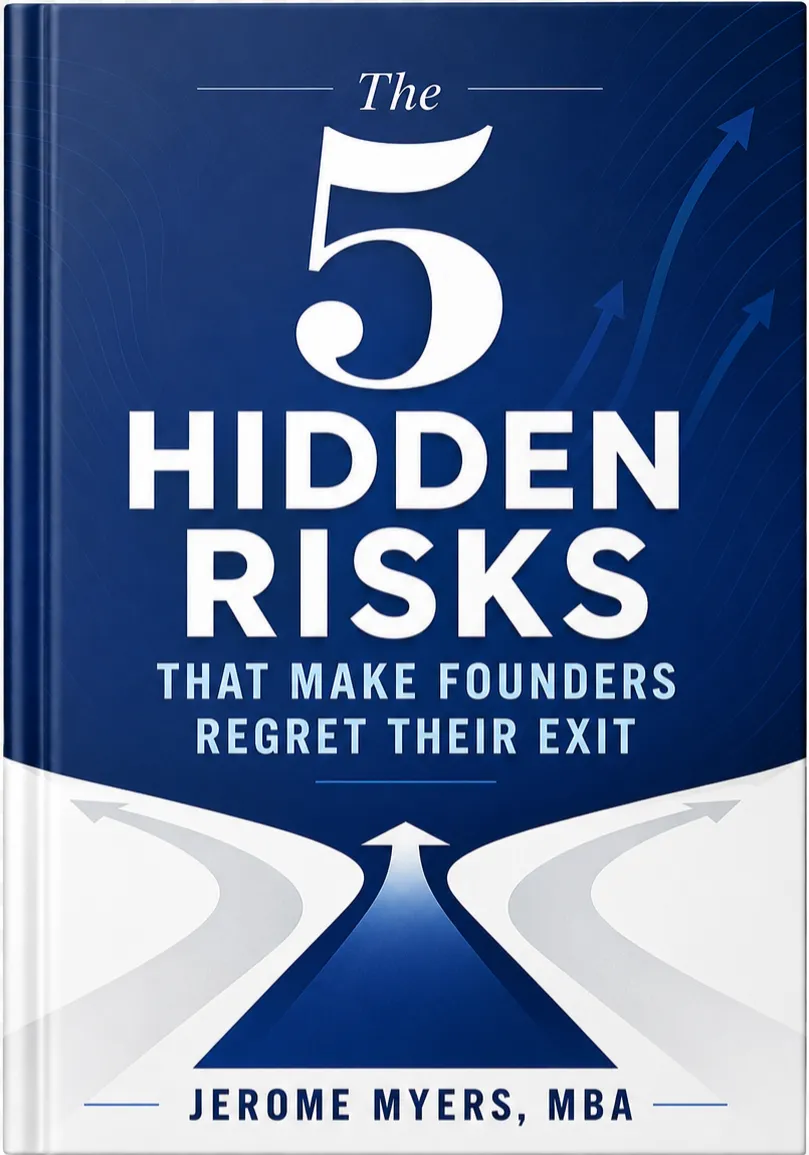
The 5 Hidden Risks That Make Founders Regret Their Exit
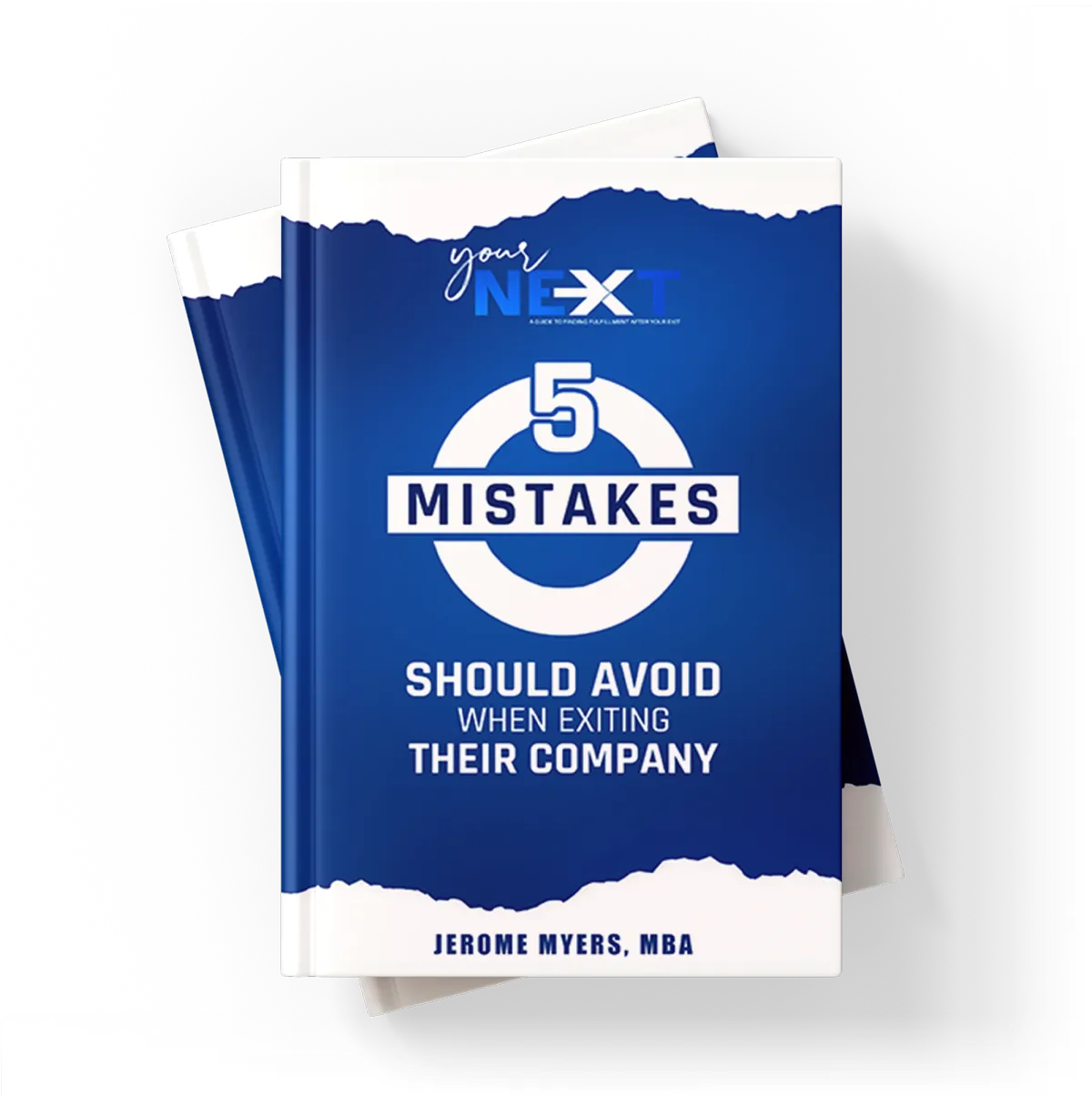
Discover common pitfalls founders face during exit and strategies to avoid them. Understand the Founder's Exit Paradox and apply these insights for a smoother transition, leading to a fulfilling, purpose-driven post-exit legacy.