MINI TUMMY TUCK ATLANTA | DR. WRIGHT JONES | MUSE PLASTIC SURGERY
Vertical Meets
Horizontal. Maximum
Correction.
The Fleur-de-Lis tummy tuck uses both a horizontal and vertical incision to remove excess skin in two directions simultaneously. It is the most comprehensive abdominoplasty technique available and is designed specifically for patients with significant vertical and horizontal skin excess, most commonly after massive weight loss.
Muse Plastic Surgery
Dr. Wright Jones, MD
Board-Certified Plastic Surgeon
Atlanta, Georgia
01
OVERVIEW
02
DR. JONES EXPLAINS
03
WHAT IT ADDRESSES
04
ALLIE'S STORY
05
PROCEDURE TYPES
06
DRAINLESS
07
BEFORE & AFTER
08
RECOVERY
09
FAQ

PROCEDURE OVERVIEW
What Is a
Fleur-de-Lis
Tummy Tuck?.
Unlike a traditional tummy tuck which uses only a horizontal incision, the Fleur-de-Lis adds a vertical incision running from the lower chest to the pubic area. This creates a T-shaped or anchor-shaped incision pattern that allows Dr. Jones to remove excess tissue both side-to-side and top-to-bottom. The trade-off is a longer scar, but for the right patient, no other technique can achieve the same degree of correction.
Procedure time: 3 to 5 hours | Recovery: 8 to 12 weeks
DR. WRIGHT JONES, MD · BOARD-CERTIFIED PLASTIC SURGEON
What Is a Tummy Tuck?
Dr. Wright Jones Explains
REPLACE WITH YOUTUBE OR VIMEO EMBED
KEY DIFFERENCES
How It Differs from Traditional Techniques
The Incision Pattern
The Fleur-de-Lis uses both a horizontal incision running hip-to-hip and a vertical incision running along the midline from the lower chest to the pubic area. This creates the distinctive T-shaped or anchor-shaped (fleur-de-lis) pattern. A traditional tummy tuck relies on a horizontal incision alone, without the vertical component.
The vertical incision is the defining feature of this technique. It allows access to address tissue laxity in both the vertical and horizontal planes simultaneously.
Why This Matters
After massive weight loss, skin excess is not limited to the horizontal plane. There is significant vertical laxity running down the center of the abdomen. A standard tummy tuck cannot address this. When skin is pulled only side-to-side, the result is a bulky, unresolved midline with persistent fullness or sagging despite the incision scar.
The vertical incision solves this by allowing the surgeon to remove that upper-to-lower excess and reshape the entire abdominal wall. For the right patient, this comprehensive approach is transformative.
CANDIDATE PROFILE
Who Is, and Isn't,
the Right Candidate?
The ideal Fleur-de-Lis candidate has specific characteristics. This is a specialized procedure designed for a defined subset of patients.
01
Massive Weight Loss
100+ pounds lost, either through bariatric surgery or sustained lifestyle changes.
02
Vertical and Horizontal Excess
Significant skin laxity in both directions, not just side-to-side.
03
Loose Hanging Skin
Visible folds, hanging tissue when standing, often with a sagging midline.
04
Weight Stable
At or near goal weight for at least 6 months. Further significant weight loss will compromise results.
05
Good Overall Health
Able to tolerate a longer surgical procedure and extended recovery. No uncontrolled medical conditions.
06
Realistic Expectations
Understands and accepts the extensive scarring. Prepared for the scar being a long-term, visible trade-off.
This Procedure Is Not Right If
Your skin excess is primarily horizontal only (traditional or extended tummy tuck is more appropriate)
Your BMI is above 31 or weight loss is ongoing
You are not prepared for the additional vertical scar along the midline
You are actively losing weight or expecting further significant weight loss
You have significant health concerns that make longer surgery too risky
Your expectations focus on avoiding scars rather than achieving maximal correction
TREATMENT AREAS
What Does the Fleur-de-Lis
Address?

Vertical Skin Excess
Midline redundancy and laxity running from chest to pubis.
Horizontal Skin Excess
Lower abdominal apron and flanking loose tissue.
Full Muscle Wall Repair
Diastasis recti correction and fascial tightening across the entire abdomen.
Waist Definition
Torso reshaping and improved body proportions through comprehensive skin and tissue removal.
Liposuction Integration
Combined liposuction to flanks and upper abdomen where indicated for refined contouring.
MUSE PLASTIC SURGERY · ATLANTA
The Fleur-de-Lis technique addresses multiple planes of tissue excess that a single-incision approach cannot accomplish.
TRANSFORMATION EXPECTATIONS
Before and After, Setting Realistic Expectations
What You Will See
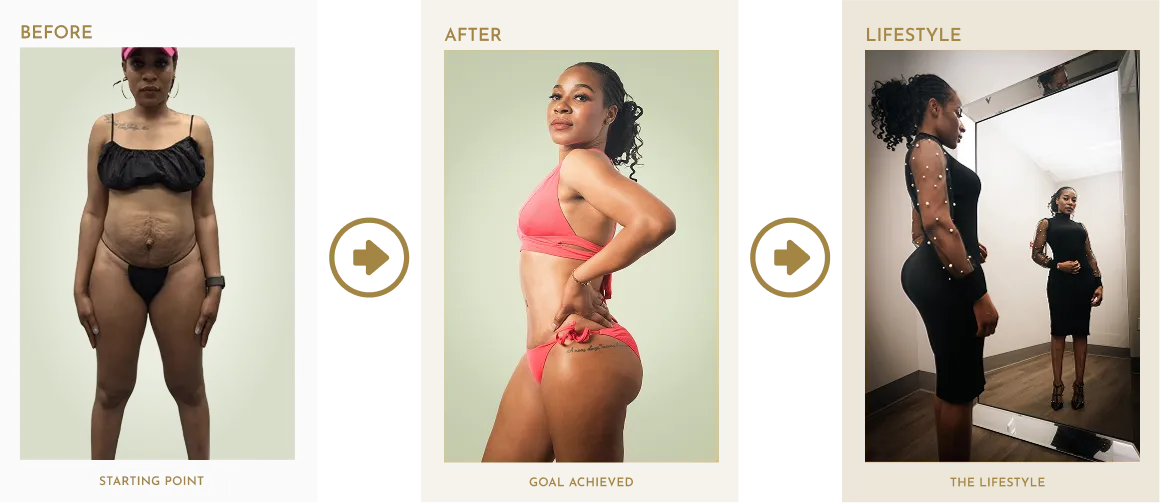
A dramatic transformation of the entire torso. The waist is restored. Clothing fits for the first time in years. Skin folds and hanging tissue are eliminated. The midline is smooth and contoured. For massive weight loss patients, this is often the most transformative procedure they undergo.
What the Fleur-de-Lis Will Not Do
It will not change arm appearance, thigh contour, or chest shape. It will not prevent future skin changes with aging or further weight changes. Scars are permanent and will be visible, especially the vertical component. This is not a weight loss procedure. It is tissue removal and contouring after weight loss is complete.
Scar Maturation Timeline
The scars will be red and prominent in the first 3 months. By 6 months, they fade to a lighter pink or pale color. By 12 months, they continue to refine and flatten. Final scar appearance is evaluated at 18 to 24 months. The vertical scar is often less visible than anticipated once healing is complete, but it remains visible and permanent.


CRITICAL DISCUSSION
The Scar Conversation
The Fleur-de-Lis produces the most extensive scarring of any abdominoplasty technique. Dr. Jones will discuss this directly and honestly during your consultation. This is not minimized or glossed over.
For patients with massive skin excess, the scar is a trade-off most find overwhelmingly worthwhile. They get the correction they need. Their body proportions are restored. They can wear the clothes they want. But this must be a fully informed decision.
During your consultation, Dr. Jones will show you scar examples, discuss placement, and ensure you understand exactly what to expect. If the extensive scarring is unacceptable to you, an alternative technique may be recommended. There is no judgment, only honest guidance.
SURGICAL OVERVIEW · DR. WRIGHT JONES, MD
How the Fleur-de-Lis Tummy Tuck
Works.
01
General Anesthesia
You are placed under general anesthesia for comfort and safety throughout the procedure.
02
Incision Mapping
This is the critical step. The T-shaped or anchor pattern is mapped precisely on your body while standing. Exact placement of the vertical incision is crucial to results.
03
Vertical and Horizontal Skin Removal
Excess tissue is removed in both directions simultaneously. The surgeon carefully removes skin and fatty tissue while preserving blood supply.
04
Muscle and Fascia Repair
The abdominal wall muscles and fascia are tightened across the full abdomen. Diastasis recti is corrected if present.
05
Torso Recontouring
Remaining tissue is sculpted for optimal shape and proportion. Liposuction to flanks and upper abdomen is performed if indicated.
06
Layered Closure
The incisions are closed in multiple layers using advanced techniques. Drainless closure is used to minimize post-operative fluid collection.
Drainless Closure Technology
Dr. Jones uses advanced layered closure techniques to minimize fluid accumulation. This reduces the need for post-operative drains, improving comfort and allowing faster return to normal activity. You will still experience swelling, but the drainless approach streamlines recovery.
REAL RESULTS
Tummy Tuck Before & After
— Real Atlanta Results.
Drag to explore.
Each image a story.
Before
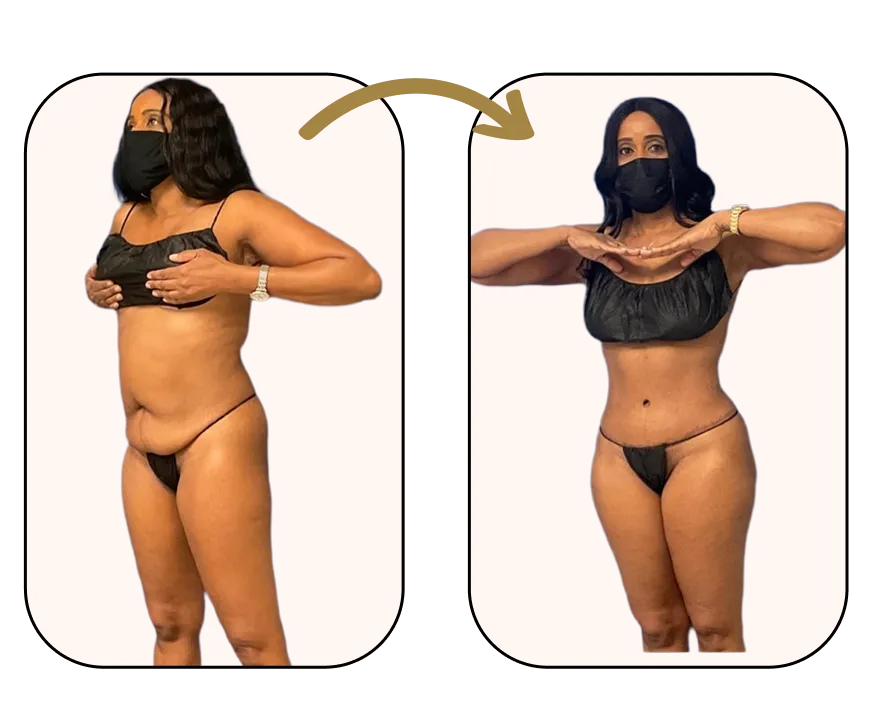
TUMMY TUCK BEFORE & AFTER · FULL ABDOMINOPLASTY · DRAINLESS
Post-pregnancy, 2 children. Diastasis recti repair, lower skin removal, waist liposuction. Drainless protocol. Six months post-procedure.
After · 6 MONTHS
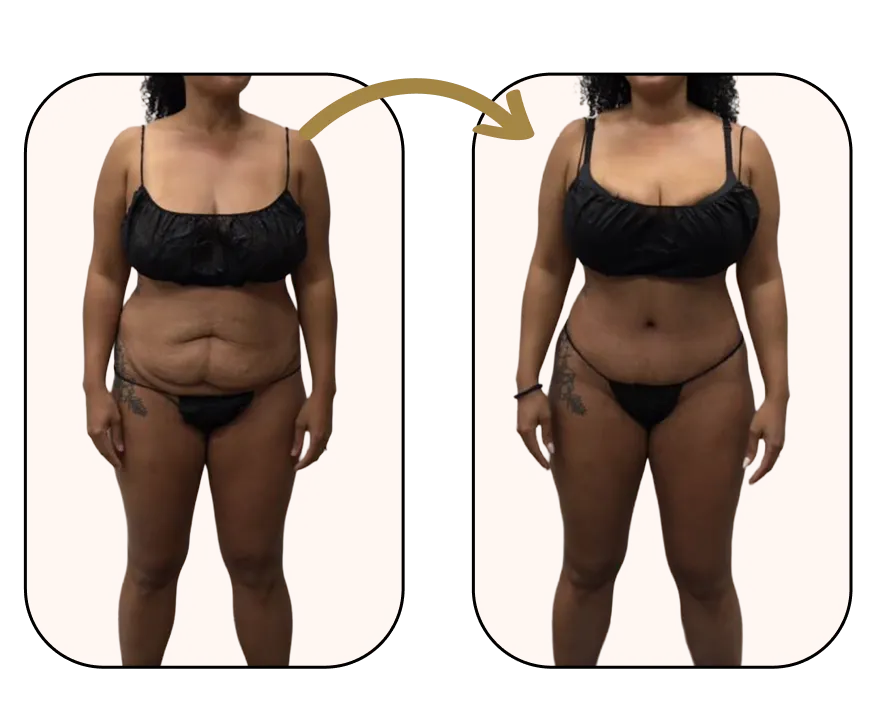
MINI ABDOMINOPLASTY · LOWER ABDOMINAL FOCUS · DRAINLESS
Post-weight loss. Lower skin laxity only. No muscle repair required. Drainless approach. Returned to exercise at seven weeks.
A full gallery of tummy tuck before and after results is available during your private consultation with Dr. Jones.
RECOVERY TIMELINE
Recovery:
What to Expect
One of the most appealing aspects of the mini tummy tuck is its recovery curve. Because the procedure is more limited in scope, and because Dr. Jones uses the drainless technique, downtime is considerably shorter than a full abdominoplasty.

DAYS 1–7
Significant rest and limited mobility. Pain is managed with prescription medication. Compression garment is worn continuously. Walking short distances indoors is encouraged. No bending, lifting, or straining. Help at home is essential.
WEEK 1-3
Gradual return to walking and light activity. Pain decreases. Most patients return to desk work by end of week 2. Swelling is peak around day 3 to 5, then begins to improve. Incision care and compression garment use continue.
WEEK 3-6
Daily routines resume. Light walking is comfortable. Swelling reduces noticeably. You can begin showering without covering incisions (once cleared by Dr. Jones). Core strengthening activities remain restricted.
WEEK 6-12
Exercise cleared gradually. Light cardio and walking resume around week 6. Weight training and high-impact activity resume around week 8 to 12, based on your healing. Final results become visible as swelling fully resolves.
MONTH 3-6
Final results and scar maturation. Scars continue to improve and refine. By 3 months, most of the visible transformation is apparent. By 6 months, you see the full extent of results. Scars continue to mature for up to 24 months.
FREQUENTLY ASKED QUESTIONS
Fleur-de-Lis Tummy Tuck
Answered.
Answered by Dr. Jones and the Muse clinical team.
What does fleur-de-lis mean?
Fleur-de-lis is French for lily flower. In tummy tuck surgery, it refers to the T-shaped or anchor-shaped incision pattern. The horizontal and vertical incisions together resemble the stylized lily shape, which is why this technique carries that name.
How is this different from a regular tummy tuck?
A traditional tummy tuck (abdominoplasty) uses only a horizontal incision running hip-to-hip. The navel is repositioned, and only horizontal skin excess is addressed. A Fleur-de-Lis adds a vertical incision running from lower chest to pubis, allowing removal of both vertical and horizontal excess simultaneously. It is more comprehensive but has a longer scar.
What will the scar look like?
The Fleur-de-Lis produces a T-shaped or anchor-shaped scar pattern. The horizontal component is similar to a traditional tummy tuck scar, running between the hip bones. The vertical component runs up the midline. Together, they are more extensive than any other abdominoplasty technique. However, scars fade over time. Most patients feel the correction is well worth the scar trade-off.
Who needs this versus a traditional or extended tummy tuck?
A Fleur-de-Lis is ideal when there is significant BOTH vertical and horizontal excess. A traditional tummy tuck addresses horizontal excess with smaller scars. An extended tummy tuck adds more horizontal reach but does not address vertical laxity. If your excess is primarily horizontal, a traditional or extended approach may be better. Dr. Jones will determine the best option during your consultation.
How long is recovery?
Recovery typically takes 8 to 12 weeks for full healing. Most patients return to desk work within 5 to 7 days. Light activity resumes by week 3. Exercise is cleared gradually starting week 6 to 12. Final results are visible by 3 to 6 months as all swelling resolves.
Can it be combined with other post-weight-loss procedures?
Absolutely. The Fleur-de-Lis is commonly combined with body lift, arm lift, thigh lift, or liposuction for comprehensive post-weight-loss transformation. Multiple procedures can be staged over several months or, in some cases, performed together depending on your health, surgery duration tolerance, and recovery preferences. Dr. Jones will recommend the best approach for your goals.
TUMMY TUCK PROCEDURES AT MUSE
Explore Other
Approaches.
The mini tummy tuck is one of several abdominoplasty approaches at Muse. The right procedure depends on your anatomy, your concerns, and the result you're after. Dr. Jones will guide you to the right fit.
01
Tummy Tuck (Main Guide)
02
Extended Tummy Tuck
03
Tummy Tuck Revision
04
Mini Tummy Tuck
05
Liposuction
06
Mommy Makeover
YOUR NEXT STEP
The Transformation
You've Earned.
After massive weight loss, you deserve a procedure that delivers comprehensive correction. The Fleur-de-Lis tummy tuck is designed precisely for this. No other technique can reshape your entire torso the way this procedure can. If you have significant vertical and horizontal excess and are ready for the scar trade-off, this may be the answer you have been searching for.