
Meta Andromeda Update: What it is, How it Works, and What to Do About It In 2026
How The Andromeda Update Works
What this means and what to do about the Andromeda Update in 2026
How to Advertise to Profit Despite The Andromeda Update 2026
If you're a media buyer, brand owner or have even the smallest contact with people who run Meta ads (ads on Facebook and Instagram), chances are you've heard of the Andromeda Update. As of October 2025, the Andromeda Update has officially been rolled out globally.
Every year, there are periods when Meta makes big changes to their ad delivery system for advertisers. These periods are often in February, after the Q4 Black Friday/Cyber Monday rush ends and the Q1 New Year high after that winds down. Usually, advertisers hate these periods of ad algorithm change because they often introduce uncertainty, outages, new bugs, or entirely different system behavior that we all have to get used to.
The Andromeda Update is one of those entirely different system behavioral changes.
What The Andromeda Update Is
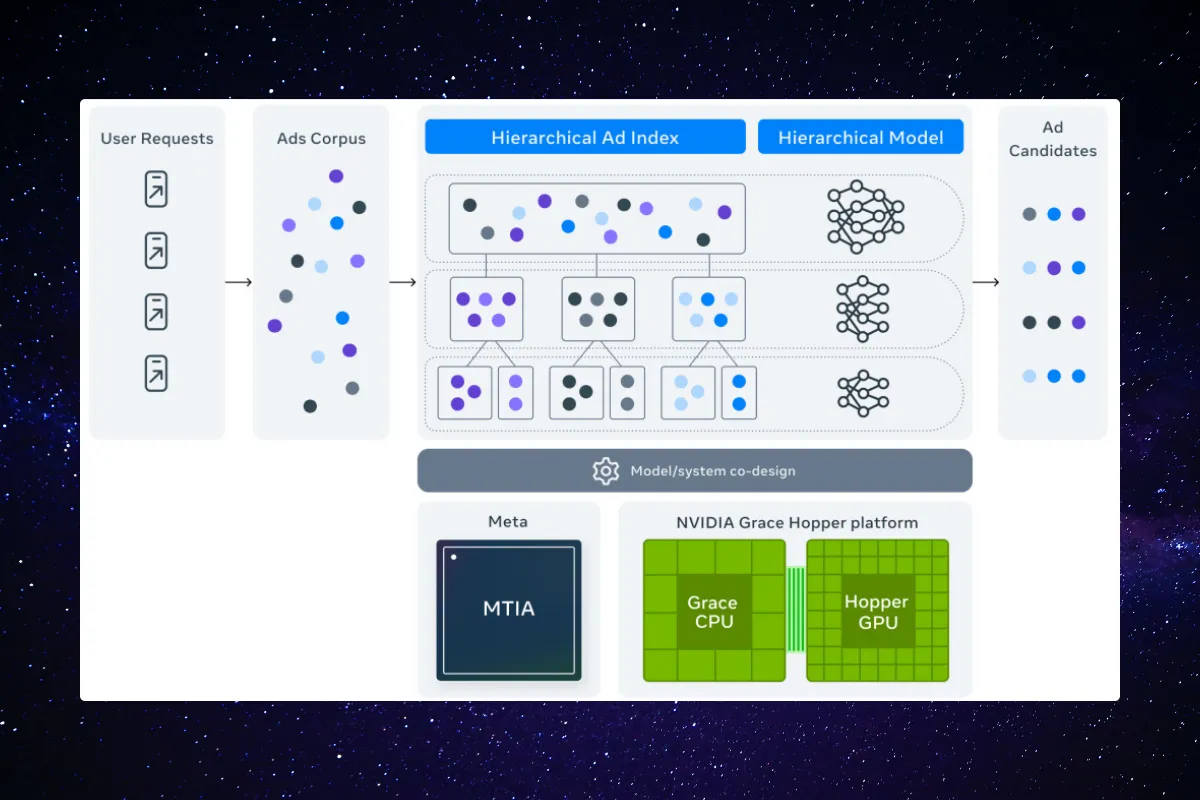
The Meta Andromeda update is a massive change to the core systems that deliver ads to users' feeds in Meta's apps like Facebook, Instagram, and others.
It's not a change that resembles past changes, where they change a few visuals in the advertiser UI, or make a few tweaks to how the system judges ads against each other when deciding which one to show a user.
The Andromeda Update is an overhaul of how ads are delivered. The main change is a shift in how the algorithm decides to serve ads — instead of answering the question "what kinds of people should see this ad?", the question it now aims to answer is "whose feed should this ad be placed on?" and that has massive effects on advertisers' performance.
Why?
Because the fundamental answers to those questions are different.
If you're answering the first question of "what kinds of people should see this ad", you're deciding between groups. You're trying to figure out which groups should get an ad: prospective car buyers? advertisers? skiers? doctors? Ultimately, you'll end up picking one or more, and you'll deliver the ad to that group. Of course, performance will vary, and you will boost or restrict the ad based on its performance with viewers as Meta always does.
If you're answering the second question on "whose feed should this ad be placed on", it's a much more personalized and granular question, and the answer is much more likely to be "no one". You're deciding on factors of the ad itself: its editing, its relationship to trends, its persuasiveness, and many more thousands of signals that judge its worthiness to compete with feed content and earn someone's attention. Ultimately, this is good for Meta, because it heats up the competition between ads and organic feed content, and may result in better content getting to users.
But it's not so good for advertisers, since many advertisers appreciated that Meta's advanced targeting features allowed them to get great financial results from easy-to-make, easy-to-test, low-production content. It was so helpful that for years, mom and pop businesses thrived from Meta advertising. But now, the stakes are higher.
How The Andromeda Update Works
So, we know the Andromeda Update fundamentally changes ads by calculating whose feeds an ad video should be on instead of what groups should receive the ad.
This also means that for the first time, Meta is essentially grouping ads, not people. Meta is able to now consider ads with slightly different introductions as the same. This is a big deal because for years, media buyers have optimized ad content by making different hooks (the introductory 3-5 seconds of a video) and testing them on the same ad. In practice, this looks like many different variations of 3-5 second clips leading you into the same video afterwards. After the Andromeda Update, Meta now considers these different openings irrelevant and is able to realize that the ad is essentially the same — and if the algorithm decides based on one variant that the entire video is a flop, the other clip variations don't get as much of a shot.
The Andromeda Update is ultimately an advancement of personalization. It's an infusion of a new level of personalization that puts ads up against the content individual users would most likely appreciate in their feed. And from a customer's point of view, this makes the feed better.
From the customer's end, they get more relevant content in their feed. New feed content generation responds even more quickly to their interests than they used to, and with more variety. For example, if someone goes skiing, and they look up ski gear or ski resorts, they won't get as many retargeting ads urging them to "go check out more ski gear" because that would be redundant (a longtime problem with paid social ads!). Instead, they'll get a mixture of ski content: videos trying to teach them better ski technique, a few ads from the same brands they checked out earlier, and more content from brands they haven't seen yet. To the customer, that is a much better experience because the content variety clearly benefits them more and doesn't overwhelm them with sales-driven messages.
This creates a shift for advertisers: now, they must create more high-quality content that adds value to users' experience at many different points in their buying journey. It used to be enough to just upload photos of your products and write some good copy to go with it, or make 15-second videos showcasing what you had to offer. Now, you have to do all that and more: you have to entertain, educate, enrich, and actually create benefits for people with the content you put out there. Otherwise, Meta won't really deliver your ads — it'll consider them losers, and you'll see your CPMs rise, your ad fatigue kick in faster, and you'll have a much harder time getting reasonably-priced traffic from the ads you upload.
What this means and what to do about the Andromeda Update in 2026
Broad targeting is now firmly the way to go
In the previous years since the iOS 14.5 update that brought extra limitations to ad tracking, marketers were frequently saying to use detailed targeting less often and rely on Meta to detect your intended audience based on signals from your uploaded and written ad content. After the Andromeda Update, that situation is now firmly in place, and that advice is not just relevant, it's pretty much mandatory.
Campaign structure is far less important
Campaign structure used to be immensely important, to the point where flawed campaign structure could crash your campaigns on its own and where good campaign structure could resurrect dead ads and squeeze many more thousands of dollars of profit out of them. But that was due to the old "allocating groups of users to ads" system of ad delivery, which is no longer in place. Now, your ads are being judged differently and many of the old ways to eke out slightly better performance simply won't work with the new system.
Increased ad volume and variety are far more important
In the past, Meta recommended keeping no more than 6-10 ads in each of your ad sets to avoid diluting performance. Performance dilution would normally happen when there are too many ads in an ad set, causing:
budgets to spread too thin,
Meta to decide on winning/losing ads too early, often leaving much better performance on the table for some ads, and
budget settling, where Meta won't spend aggressively even if there were extra winners in the ad set — it would pick its own top few to spend on, leaving potential winning ads unrealized even if they're right next to other winners that got all the spend.
This is no longer an issue, as Meta is much more able to pick individual ads to serve users on Facebook, Instagram, or any other owned platform, regardless of volume. Due to this, ads burn out and reach creative fatigue much more quickly since they're being chosen for their few ideal placements, and not for larger groups where the ad could just work well in.
On the topic of increasing ad variety, since Meta is now more able to distinguish between net-new ads and variations of single ads, it tends to view ads almost as angles now. This means we need to make our ad variations much more distinct. Instead of 9 explainer-style videos with different beginnings, a winning strategy would look more like 3 explainer-style videos, 3 skit-type or comedic videos, and 3 customer testimonial-type videos. For the most part, brands have to stretch themselves to create wider varieties of appealing content in order to stand a solid chance and delight users.
Creative diversity is now the biggest lever to increase performance
Since the ad delivery systems over at Meta have evolved to match individual ads to individual people, brands must now create more different individual ads to increase their reach by ensuring their ads are compatible with as many individuals as possible. It's a win for personalized marketing, very likely a win for users since they stand to receive better content from the platform, but it's a difficult challenge for many advertisers, especially those with limited budgets. However, winning with limited budgets is not impossible. A winning small-budget strategy would look more like putting out organically appealing Reels or TikTok videos where the brand constantly connects with customers on a more intimate level, which benefits both the brand and their audience. The only downside is executing that strategy may be difficult for some.
Direct-response advertising is now simply a part of the strategy
Updates like these put long-term, customer-centric strategies in the center of most brands' marketing playbooks. These changes encourage (or force) brands to be more thoughtful of the content they put out. They encourage brands to create content users would enjoy, put out high quality content more consistently, and rely less on one-hit-wonder types of ads and more on behind-the-scenes, journey-style, and audience-building content. As these changes go into effect, the differences between promoted content and organic content become smaller (or at least less stark) over time as the bar to enter users' feeds gets higher.
How to Advertise to Profit Despite The Andromeda Update
Targeting and Campaign Structure
Generally rely on broad targeting to get you to your target audience. When testing it against interests, use interest stacks (ex: interest 1 or interest 2 or interest 3, etc.) as Meta's machine learning is much more capable now with large audiences than it used to be in the past.
For campaign structure, stick to CBO (Campaign budget optimization) and feel free to stack many ads at once in one ad set or campaign. The edge is now generally found in the creative itself rather than the campaign structure.
Creative Variety
When creating ads, use vastly different visual styles, points of view, or content types. Changing the hook doesn't cut it anymore, and you want your ads to appeal to different people who like different content, and who are probably in different moods. Create ads as if you were creating organic content for the main feed, just a bit more optimized for direct-response actions. The more useful you make your content to the viewer, the better.
Post-Click Experience
Invest time and energy into optimizing your page conversion rates and off-platform experience.
In the age of the Andromeda update, real creative diversity, broad targeting, and delightful post-click experiences are no longer optional.
