Nutrigene DNA
Origins of the RIASEC Framework
The RIASEC Framework was developed by American psychologist John L. Holland in 1959 for career guidance, based on the observation that people do best in environments that suit them. It has since been widely adopted in career, psychology, and education systems around the world, including the US and Singapore.

What RIASEC Stands For
What RIASEC Stands For
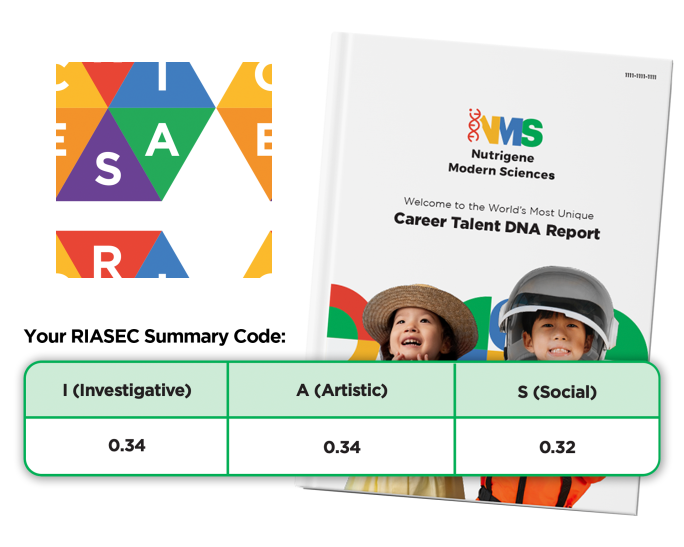
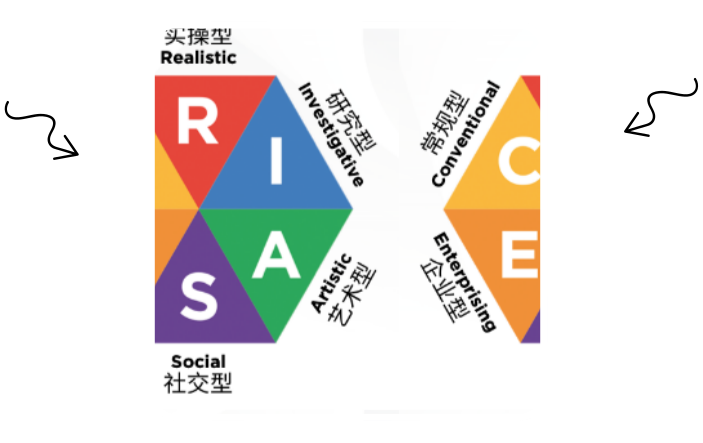
RIASEC represents six learning orientations identified by psychologist John Holland. Each describes how a person naturally prefers to learn and engage.
R – Realistic
Learns best by doing and hands-on activities.
I – Investigative
Prefers thinking, questioning, and problem-solving.
A – Artistic
Learns through creativity, ideas, and expression.
S – Social
Learns best through interaction and collaboration.
E – Enterprising
Learns through action, leadership, and influence.
C – Conventional
Prefers structure, routines, and step-by-step learning.

How RIASEC Is Used in Education Today
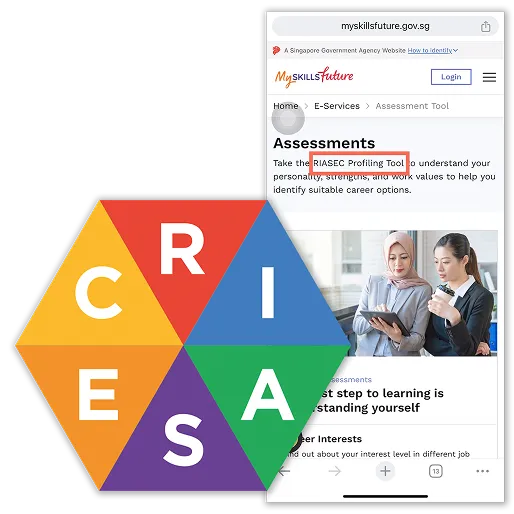
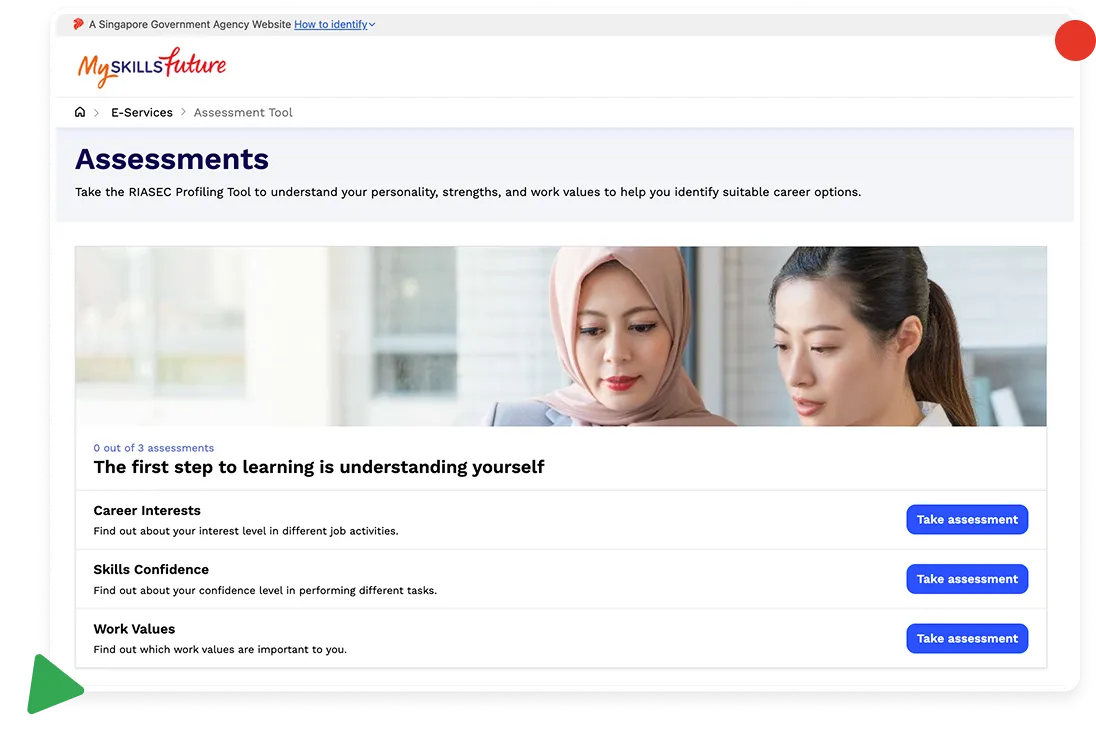
In Singapore, RIASEC is used within national education initiatives such as SkillsFuture Singapore to support education and career decision-making.
In the United States, RIASEC is used across school counselling and career education programs. Examples include:
River Valley School District (Wisconsin), which uses RIASEC codes in its career exploration curriculum
Washington Community Schools (Iowa), which integrates RIASEC into guidance counselling for high school students
California Department of Education’s Career Technical Education (CTE) programs, which match students’ learning and career interest groups with RIASEC codes.

Why DNA Is Relevant
to Education
Education research shows that learning outcomes are shaped by both genetics and environment. Research suggests genetic factors account for roughly 40–60% of variation in educational attainment at a population level. While DNA does not decide results, it is a stable starting point to help parents understand how their child learns best.

From Traditional
RIASEC to RIASEC DNA


Traditional RIASEC (Questionnaire-Based)
Based on questionnaires that typically require 40–180 questions
Influenced by opinions, environment, or mood
Results can change over time
Primarily designed for individuals aged 18 and above

RIASEC DNA©
Framework (DNA-Based)
Based on DNA markers mapped to the RIASEC framework, without questionnaires
Not influenced by opinions, environment, or mood
Results do not change over time
Applicable from early childhood, not limited to adults
RIASEC DNA offers insight into a child’s learning tendencies, not fixed labels. It is a starting point to support understanding, observation, and better learning decisions, while a child’s growth continues to be shaped by environment, experience, and emotional support.
How Parents Benefit From the RIASEC DNA Framework©
RIASEC Code
How This Child Learns Best
Preferred Enrichment & Environments
Possible Future Pathways
Realistic (R)
Learns by doing, hands-on practice, and physical engagement
Building, experiments, sports, maker activities, oupoor learning
Engineering, technical fields, applied sciences
Investigative (I)
Learns by thinking, questioning, and problem-solving
Science exploration, research tasks, logic games, inquiry-based learning
Research, technology, analytical fields
Artistic (A)
Learns through creativity, ideas, and self-expression
Art, music, design, storytelling, open-ended projects
Creative industries, design, innovation roles
Enterprising (E)
Learns through action, leadership, and influence
Leadership roles, debates, entrepreneurship activities, projects
Business, management, leadership pathways
Conventional (C)
Learns with structure, routines, and clear steps
Organized tasks, systems-based learning, planning activities
Administration, operations, structured professions
Case Studies

Case Studies

“My child struggled in his 1-on-1 swimming classes. After I found out his RIASEC Code is Social, I switched to group lessons. He started learning much faster!”
Belle
Parent
Belle
Parent

“3 years ago, my child was sensitive, cried easily, and lacked confidence. Nutrigene’s behavioural therapist and psychologist suggested more outdoor activities with his father like ATV and parkour. Over time, he became more confident and even grew into a role model for his younger brother.”
Joyce
Parent
Joyce
Parent

“My daughter took piano lessons for months before we realised she did not enjoy it. It was the same trial-and-error process for many enrichment classes. Nutrigene's report revealed that her real interests and strengths was in dance, not music. We shifted her to rhythm-based activities, and she is now more confident and much happier!”
Amanda
Parent
Amanda
Parent


How Educators Benefit From the RIASEC DNA Framework©
A clearer way for teachers and parents to talk about a child’s learning needs
Better continuity in understanding a child, even when teachers or classes change
Easier conversations with parents, leading to better cooperation and follow-through

Classroom Strategies
Used In Preschools


Frequently
Asked Questions
Is my child too young for RIASEC DNA?
Traditional RIASEC questionnaires are designed for adults, but RIASEC DNA can be applied from as early as 20 days old because it is based on genetic markers, not self-reporting
Will my child be boxed into one type or label?
No. Most children show a combination of RIASEC orientations. The framework is meant to guide understanding, not label or limit a child.
Does RIASEC measure intelligence or academic ability?
No. RIASEC focuses on learning preferences and engagement styles, not intelligence, grades, or academic potential.
Can learning styles change over time?
Learning behaviours can change with experience and environment. RIASEC DNA provides a stable baseline, while how it shows up may evolve as a child grows
How should parents and teachers use RIASEC insights responsibly?
RIASEC insights should be used as a starting point for observation and better decisions, alongside guidance, environment, and emotional support.
Quick Links
Follow Us



DNA for Education, Powered by the RIASEC Framework

Why Nutrigene
Legal
Privacy Policy
Terms & Condition
© 2026 Nutrigene Modern Sciences All Rights Reserved.