What is USA Pellet Mill?
USA Pellet Mill is a Florida-based manufacturer and supplier of pellet mills, feed production equipment, biomass machinery, and complete pellet production lines. We provide solutions for small farms, growing feed businesses, and large industrial operations.
Where is USA Pellet Mill located?
USA Pellet Mill is located in Opa-locka, Florida. From our Florida location, we serve customers across the United States and internationally.
Do you manufacture your own machines?
Yes. Our equipment is produced and assembled through our manufacturing and engineering operations, allowing us to maintain quality control and provide reliable solutions.
Who do you serve?
We work with a wide range of customers, including small farmers, agricultural entrepreneurs, feed manufacturers, aquaculture businesses, biomass producers, and industrial processing companies.
What is the best pellet mill for a small farm or startup?
Flat die pellet mills are a common choice for small farms and startups because they are cost-effective, simpler to operate, and well-suited for smaller production volumes.
How much does a small pellet mill cost?
Pricing depends on capacity, motor size, and configuration. The fastest way to get an accurate price is to share your target production (kg/hour), material type, and power requirements so we can recommend the right model
How much feed can a small pellet mill produce per hour?
Small pellet mills commonly produce between 50 kg and 500 kg per hour depending on the model, material, moisture level, and operator setup.
Can I make my own chicken, cattle, or livestock feed pellets?
Yes. Pellet mills are used to produce feed pellets for poultry, cattle, pigs, and other livestock using grains and formulated feed mixtures.
What equipment do I need to start a small feed production setup?
A basic setup typically includes a grinder or hammer mill, a mixer, and a pellet mill. Depending on your goals, you may also add a cooling system, conveyors, and bagging or packaging equipment.
Is it profitable to start a small feed pellet business?
It can be profitable if you have consistent raw materials, local demand, and the right machine capacity. Many customers start by reducing their own feed costs and then expand into local sales.
What should I prepare before requesting a quote?
Have these details ready: material type (example: corn, soy, hay), target pellet size, desired output (kg/hour), available power (single-phase or three-phase), and where the equipment will be installed.
What is the difference between flat die and ring die pellet mills?
Flat die pellet mills are commonly used for smaller production volumes and simpler setups. Ring die pellet mills are designed for higher output, longer run time, and more consistent pellet quality in commercial operations.
What capacity pellet mill do I need for my farm or feed business?
Capacity depends on how many animals you feed, how many hours per day you plan to run the equipment, and whether you produce for your own use or for sale. Share your target output (kg/hour or tons/hour) and we can recommend the right configuration.
Can your machines produce fish feed or aquafeed?
Yes. We offer extruders and production solutions for aquaculture feeds. The right setup depends on whether you need sinking feed or floating feed and the pellet size you require.
What equipment is included in a commercial feed production line?
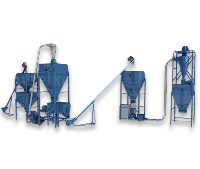
A typical commercial line includes grinding (hammer mill), mixing, pelletizing, cooling, conveying, and optional bagging or packaging. The final configuration depends on your raw materials and capacity goals.
Do you provide spare parts and technical support?
Yes. We supply replacement parts and provide technical support to help customers with operation, maintenance, and troubleshooting.
How much does a commercial pellet mill cost?
Pricing depends on capacity, materials, automation level, and accessories. The fastest way to receive an accurate quote is to provide your raw material type, target pellet size, and desired output.
Can you help upgrade an existing feed operation?
Yes. We can recommend equipment upgrades to increase capacity, improve pellet quality, and optimize your process flow.
Do you offer complete turnkey pellet production plants?
Yes. USA Pellet Mill provides complete turnkey solutions that include system design, equipment supply, and integration from raw material processing to finished pellet packaging.
Can you design a custom plant layout for my facility?
Yes. Our engineering team works with you to design a layout based on your available space, production capacity, material flow, and operational requirements.
What production capacities do your industrial systems support?
Our industrial systems support a wide range of capacities, from approximately 1 ton per hour to large-scale operations producing multiple tons per hour, depending on the application.
Can your systems be fully automated?
Yes. We offer manual, semi-automatic, and fully automated solutions depending on your production goals and labor preferences.
What industries use your industrial pellet systems?
Our equipment is used in commercial feed manufacturing, poultry and livestock operations, aquaculture, pet food production, biomass fuel, and wood pellet industries.
What information do you need to quote a turnkey project?
To prepare a proposal, we typically need the raw material type, target capacity (tons per hour), pellet size, facility location, available power, and level of automation required.
Do you provide project consultation and technical support?
Yes. We provide consultation throughout the planning process and ongoing technical support to help ensure successful operation.
Can your machines produce wood pellets or biomass fuel pellets?
Yes. USA Pellet Mill offers pellet mills and supporting equipment that can process biomass materials such as sawdust and agricultural residues into fuel pellets.
What raw materials can be used for biomass pellets?
Common materials include sawdust, wood chips (processed to the correct size), rice husks, straw, corn stalks, bagasse, and other organic residues. Material preparation depends on moisture level and particle size.
Do I need a dryer to make biomass pellet
Not always, but many biomass projects require drying to reach a moisture range that produces stable pellets. Whether you need a dryer depends on your incoming material moisture.
What equipment is typically needed for a biomass pellet production setup?
A typical setup may include size reduction (crusher or hammer mill), drying (if needed), pelletizing, cooling, screening, conveying, and bagging or bulk handling.
How do I choose the right pellet mill for biomass material?
Selection depends on the type of biomass, desired capacity, required pellet diameter, and expected run time. Sharing your material type and target output helps determine the best machine and line configuration.
Can you provide a complete biomass pellet production line?
Yes. We can design and supply complete biomass pellet lines based on your capacity goals, raw material type, and automation requirements.
Do you help customers choose the right equipment?
Yes. We provide consultation to help you select the right pellet mill or production line based on your material type, target capacity, pellet size, budget, and available power.
Do you offer project planning and line configuration services?
Yes. We can recommend a complete equipment configuration and workflow for your application, including grinding, mixing, pelletizing, cooling, conveying, and packaging.
Do you provide installation guidance?
Yes. We provide technical instructions and support to help you install and set up your equipment correctly.
Do you provide training on how to operate the machines?
Yes. We provide operational guidance and best practices for start-up, safe operation, routine maintenance, and troubleshooting.
Can you customize equipment for my application?
Yes. We can customize equipment and production line configurations based on your raw materials, capacity goals, facility layout, and automation needs.
Do you provide replacement parts and maintenance support?
Yes. We supply replacement parts and provide support for maintenance planning and common service needs.
How do I request a quote or consultation?
You can contact us through the website or by phone with your material type, desired output, pellet size, and location. Our team will recommend options and provide a quotation.
Do you ship across the United States?
Yes. USA Pellet Mill ships equipment throughout the United States
How long does delivery take?
Delivery time depends on the equipment model, order configuration, and destination. Contact us with your location and the machines you need for an estimated timeline.
How much does shipping cost?
Shipping cost depends on equipment price. We can provide shipping estimates during quoting
Do your machines come with a warranty?
Yes. Warranty coverage varies by product. Warranty terms are provided during the purchasing process.
What payment methods do you accept?
Payment options may vary depending on the order and location. Contact us to confirm available payment methods for your purchase.
Can I request a quote before ordering?
Yes. We recommend requesting a quote so we can confirm the correct configuration for your material type, pellet size, and capacity goals.
Do you offer returns or refunds?
Return and refund terms depend on the product and order type. Please review our Return/Refund Policy or contact us for details.
What factors affect the price of a pellet mill?
The price depends on several factors including machine capacity, motor size, construction materials, automation level, and any additional equipment such as mixers, conveyors, or cooling systems.
How much electricity does a pellet mill use?
Power consumption varies based on the size and capacity of the machine. Larger commercial and industrial pellet mills require more power, typically three-phase electricity, while small machines may operate on single-phase power.
What is the return on investment (ROI) for a pellet mill?
ROI depends on your production volume, raw material cost, feed savings, and local market demand. Many customers recover their investment by reducing feed costs or selling pellets commercially.
Is it better to buy new or used pellet equipment?
New equipment offers higher efficiency, longer service life, warranty coverage, and access to technical support, making it a more reliable long-term investment.
How do I choose the right pellet mill for my budget?
Start by defining your production goals, material type, available power, and expected daily output. Our team can recommend equipment options that match your budget and growth plans.
Can I start small and expand later?
Yes. Many customers begin with a smaller system and upgrade or add equipment as their production needs grow.
Are you a pellet mill manufacturer in the USA?
Yes. USA Pellet Mill is a Florida-based manufacturer and supplier of pellet mills, feed equipment, biomass machinery, and production line solutions for customers across the United States and internationally.
Do you supply pellet mills in Florida?
Yes. We serve customers throughout Florida and can coordinate local and nationwide shipping.
Do you ship equipment to customers near me?
Yes. We ship throughout the United States and can also support international delivery. If you share your city and state, we can confirm shipping options for your area.
Can I visit your facility in Florida?
Visits may be available by appointment. Contact us to schedule a time and confirm availability.
Do you provide support for customers outside Florida?
Yes. We provide remote support and ship replacement parts to customers across the United States and internationally.
How do I contact USA Pellet Mill for a local quote?
You can contact us through the website or by phone. Sharing your location, material type, pellet size, and target capacity helps us provide an accurate quote.
About Us
USA Pellet Mill is a specialized manufacturing and engineering company founded in January 2013. We are the direct manufacturers of the industrial machinery featured on our website, operating from our headquarters and production facility in Opa-locka, Florida.



Contact Us
Phone: +1 786 918 3634
Copyright© 2026 USA Pellet Mill - All Rights Reserved.