Southampton & Surrounding Areas


Level 3 Horticulture Qualified


RHS Wisley
Trained
Grass Seeding
Lawns across Southampton take a battering through a typical winter. The city's wetter soils in low lying areas like Millbrook and Weston hold water for months, foot traffic compacts the surface, and thinner topsoil on newer estates gives grass little to work with. Grass seeding by Edens Edge landscaping repairs bare, thin and patchy areas using the right seed for the conditions, so your lawn comes back properly rather than just filling in temporarily.

Bare Patch Repair
Full Lawn Overseeding
Soil Preparation Included
Garden Trouble? Let Us Help.
Best Price Guarantee
Every Project Tailored To You
Bare patches and thin areas in a lawn do not fix themselves. Scattering seed over the top of compacted or waterlogged ground produces almost nothing, because the seed has nowhere to establish. In Southampton, where heavier soils in areas like Weston and Millbrook stay wet well into spring, and where many suburban semis in Bitterne Park and Sholing have rear gardens that take years of foot traffic, the ground needs proper preparation before any seed goes down. Grass seeding from Edens Edge landscaping starts with the soil, not the seed, so the result lasts more than one season.
Is Your Lawn Due a Reseed?
Signs Your Southampton Lawn Needs Grass seeding
The clearest sign is a lawn that comes out of winter with bare or brown areas that do not recover as the season progresses. In Southampton, the combination of mild winters and frequent wet weather means the ground rarely freezes hard, but it does stay saturated for long periods. In low lying gardens near the Itchen and Test corridors and on heavier soils in Millbrook and Weston, lawns can sit waterlogged from November through to February. That sustained saturation suffocates grass roots, and the areas that die back during that period will not grow back on their own in spring. By April those patches are obvious, and without reseeding they tend to fill with moss and annual weeds rather than recovering as grass.
The second sign is a lawn with large areas of thin, weak coverage that browses out quickly in summer and shows the soil beneath. This is common on newer build estates across Southampton, where developer installed turf was laid over minimal topsoil depth above a compacted sub base. The grass never establishes deep roots because there is not enough soil structure to grow into. In summer, those lawns brown off on any south facing areas with no shade, not because the grass is dead but because the root system is too shallow to reach moisture. Overseeding alone will not fix a lawn in that condition. The soil needs scarifying and loosening before seed goes down, otherwise the same thin sward just gets repeated.
The third sign is a lawn that has visible bare runs along paths, gates, and areas of regular use. These worn lines are caused by compaction from foot traffic pressing the soil particles together until there is no air space left for roots to occupy. Grass cannot grow in fully compacted ground regardless of how often it is seeded. This pattern is very common in the medium sized rear gardens of suburban semis in areas like Sholing and Bitterne, where one or two regular routes across the lawn gradually strip the grass away over several seasons. Reseeding those areas without first breaking up the compaction will fail. The fix requires aeration or scarification of the worn lines before any seed goes down, so the new growth has a surface it can actually establish in.

How Our Grass seeding Service Works
The first step is assessing what has caused the problem before any seed is selected or ordered. Bare patches from waterlogging need a different approach to worn areas caused by compaction, and a lawn that is thin because of poor topsoil depth needs different preparation to one that has thinned due to moss competition. In Southampton, those three causes often appear in the same lawn at the same time, because the city has a wide range of soil conditions across a short distance. Gardens in lower lying parts of the city near the estuary corridors tend to hold water and develop waterlogging problems, while gardens on newer estates often suffer from thin topsoil and compaction combined. Getting that assessment right before the work starts is what determines whether the seeding takes or fails.
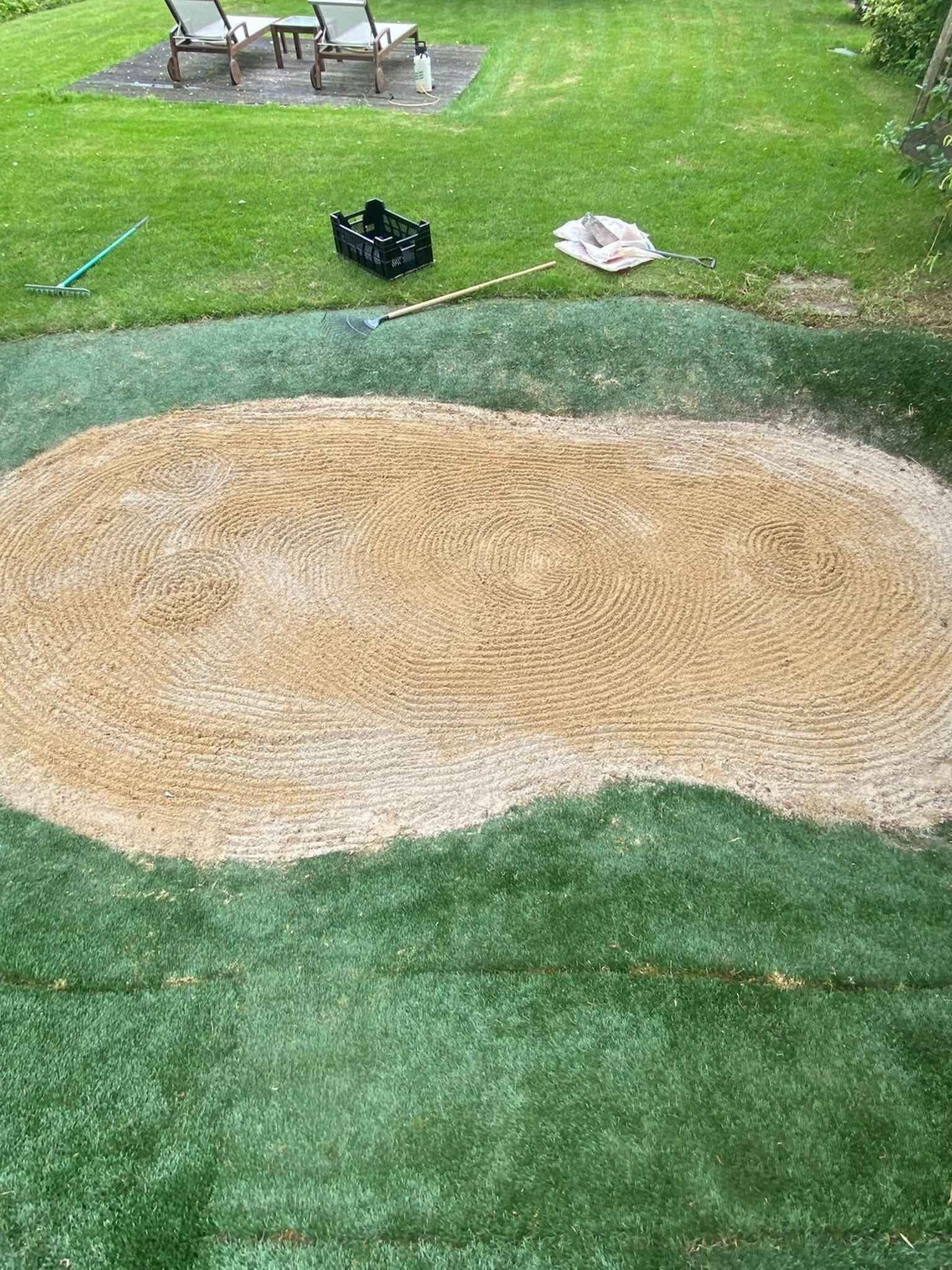
Preparation is done before any seed is applied. On bare or worn areas, the surface is scarified or raked out to remove any dead material, break the soil crust and create a seedbed that seed can make contact with. On compacted runs, the ground is aerated before seeding so there is structure for roots to grow into. If the soil is very thin or depleted in the affected areas, a light top dressing is worked in to improve the growing medium. Skipping this preparation is the most common reason Grass seeding fails. Grass seed dropped onto a hard, capped surface or into a layer of dead thatch has a very low germination rate regardless of seed quality.
Seed selection is matched to the conditions of the specific lawn. A shaded rear garden in a terrace in St Denys or Portswood needs a shade tolerant mix that can establish with limited direct light. A south facing open lawn on a newer estate in the western suburbs needs a more drought resilient mix with deeper rooting varieties. Using a generic utility mix for every situation produces inconsistent results. Edens Edge landscaping selects seed based on the light levels, soil type and use patterns of each specific garden rather than applying the same product across every job.
After seeding, the treated areas are given the best possible conditions to establish. On smaller areas this means light protection from birds and foot traffic during the germination period, which typically runs four to eight weeks depending on the time of year and the soil temperature. The best times to carry out Grass seeding in Southampton are late summer into early autumn, when the ground is still warm but rainfall increases naturally to support germination, and mid spring once the soil has warmed past the point where growth is reliable. Edens Edge landscaping advises on timing as part of every job so the seed goes down at a point where conditions give it the best chance.
FAQ's
Frequent Asked Questions
Common questions about Grass seeding from Edens Edge landscaping, covering Southampton and surrounding areas.
When is the best time to reseed a lawn in Southampton?
The two best windows are late summer into early autumn, typically late August through to October, and mid spring from April onward once the soil has warmed. In Southampton, the autumn window is often more reliable because the ground is still warm from summer, natural rainfall increases to support germination, and the seed has time to establish before winter. Spring seeding works well but can be affected by a dry spell in May or June before the new grass has rooted deeply. Edens Edge landscaping will advise on the best timing for your specific lawn based on its condition and the time of year you get in touch.
Why did my reseeding fail last time?
The most common reason is that the seed was applied to ground that was not properly prepared. Grass seed needs to make contact with loose, aerated soil to germinate. If it is scattered onto a hard, compacted surface or into a layer of dead thatch, the germination rate is very low regardless of seed quality. The second most common reason is using the wrong seed mix for the conditions, such as a standard utility mix in a shaded garden where a shade tolerant variety was needed. Edens Edge landscaping assesses the cause of the bare or thin areas first, prepares the surface correctly, and matches the seed to the conditions so the result is more reliable.
Do you just reseed or does the service include preparation work?
Preparation is included as standard. Reseeding without preparation rarely works. Depending on what the lawn needs, this includes scarifying or raking out the surface to create a seedbed, aerating compacted areas to give roots somewhere to grow, and applying a light top dressing where the soil is very thin or depleted. The preparation is what makes the seeding work, so it is not an optional extra. Edens Edge landscaping will explain what preparation is needed on your specific lawn as part of the initial assessment.
Can you reseed just the bare patches or does the whole lawn need doing?
Spot reseeding of bare or worn areas is a standard part of the service. Not every lawn needs a full overseed. Where the problem is confined to specific areas, such as a worn path line, a patch that died back over winter, or a shaded corner that has thinned, the work is focused on those areas rather than the whole surface. Edens Edge landscaping will assess the lawn and be clear about what needs treatment and what does not, so you are not paying for work that is not necessary.
Are you insured and do you have a cancellation policy?
Edens Edge landscaping holds £5m public liability insurance. If you need to cancel a booked job, the cancellation policy allows a full refund with three days notice. For any questions about bookings or to get a quote for Grass seeding in Southampton, call 07850412717 directly.
Get in touch
Get Your Lawn Back on Track
Edens Edge landscaping covers Southampton, Romsey, Winchester and the surrounding areas. [CLIENT TO CONFIRM: response time or booking window]
Edens Edge landscaping
Professional Gardener in Southampton
Unit 4, Riverside Court, Cupar KY15 5JY, United Kingdom
Quick Links
Service areas
Opening Hours
Mon - Fri
8am – 6pm
Saturday
9am – 4pm
Sunday
Closed
© 2026 Edens Edge landscaping. All rights reserved.
Privacy Policy
Terms & Conditions