Unprogrammed appropriations
Decision to veto nearly P92.5 billion in unprogrammed appropriations
Tap to view
👁
Mixed

Your support keeps independent commentary alive.
☕ Buy us a coffee and keep the conversation going


A viral clip is making rounds online—claiming to show a clearer view of an alleged assassination attempt.
But there’s a twist.
👉 The footage wasn’t originally clear
👉 It was enhanced… using AI
A social media post claims that security footage from an alleged assassination attempt was enhanced using artificial intelligence to improve visibility.
According to the uploader, the original video quality was extremely low, and AI was used to “fill in the gaps” to provide a better view of the incident.
However, the same post also admits that the AI may have generated details that were not actually present in the original footage.
This is not just about one video.
👉 This is about truth vs AI interpretation
Because AI doesn’t just enhance—
👉 it sometimes creates
And when that happens, the line between:
real evidence
and generated visuals
👉 becomes blurred
Can AI-generated enhancements be trusted?
In cases involving serious claims:
Visuals carry strong influence
People believe what they see
But AI can introduce elements that never existed
That creates a critical risk:
👉 False certainty
Online reactions are mixed:
Some are impressed by the clearer visuals
Others are skeptical about authenticity
Many are questioning whether the footage can be considered reliable
And this is the new reality—
👉 Seeing is no longer always believing
This goes beyond one viral clip.
It affects:
Public trust in digital evidence
How news is consumed and verified
The role of AI in shaping perception
Because in today’s world—
👉 technology can amplify truth… or distort it
In an age of powerful tools, discernment becomes more important than ever.
Because clarity created by machines…
is not always the same as truth discovered by evidence.
And the real question now is:
👉 Are we watching reality—or a reconstruction of it?
“Test everything; hold fast what is good.”
This verse teaches discernment.
Not everything presented should be accepted immediately—
👉 everything must be tested and examined
In today’s context:
Verify digital content
Question AI-generated visuals
Seek truth beyond appearance
December 12, 2025•3 min read
South Korea is once again facing a political storm.
On Thursday, Oceans Minister Chun Jae-soo tendered his resignation after being accused of receiving illegal funds from the Unification Church, a controversial religious movement long linked to political influence and high-level lobbying.

The allegations claim that Chun accepted 30 million won (USD $20,500) in cash and luxury watches between 2018 and 2020—donations reportedly funneled through the church’s leaders, including global chairman Yun Young-ho, who was questioned by investigators earlier this week.
The scandal comes at a time when South Korean politics is already volatile. Public frustration is growing amid intense media scrutiny of both ruling and opposition camps, with some lawmakers across party lines allegedly connected to the church’s financial network.
Founded in 1954 by Sun Myung-moon, the Unification Church has amassed millions of followers and billions in assets across education, construction, media, and charity foundations.
The movement has also been tied to figures like Japan’s late Prime Minister Shinzo Abe, whose assassin claimed the church had financially ruined his family — sparking fresh political investigations both in Japan and Korea.
In South Korea, the church has cultivated influence for decades, participating in state events, contributing to public institutions, and maintaining indirect ties with political families—including the nation’s former First Lady Kim Keon Hee.
President Lee accepted Chun’s resignation, with government leaders stating that stepping down was necessary to ensure the administration could continue its work “without faltering.”
Chun denies wrongdoing but said he would not allow the controversy to distract from pressing national issues.
The resignation also follows a separate probe into alleged ties between a “religious group” and politicians — language widely interpreted as referencing the Unification Church.
Justice Minister Lee reiterated that institutions, corporations, and religious groups must all face sanctions if they breach constitutional boundaries, signaling more intense scrutiny ahead.
Chun’s departure may be only the beginning.
With investigations widening and public anger rising, analysts say South Korea may be heading toward another wave of political realignment — one shaped by transparency demands, anti-corruption movements, and the lingering influence of powerful religious networks.
Politikanta Minute will continue monitoring the developments.
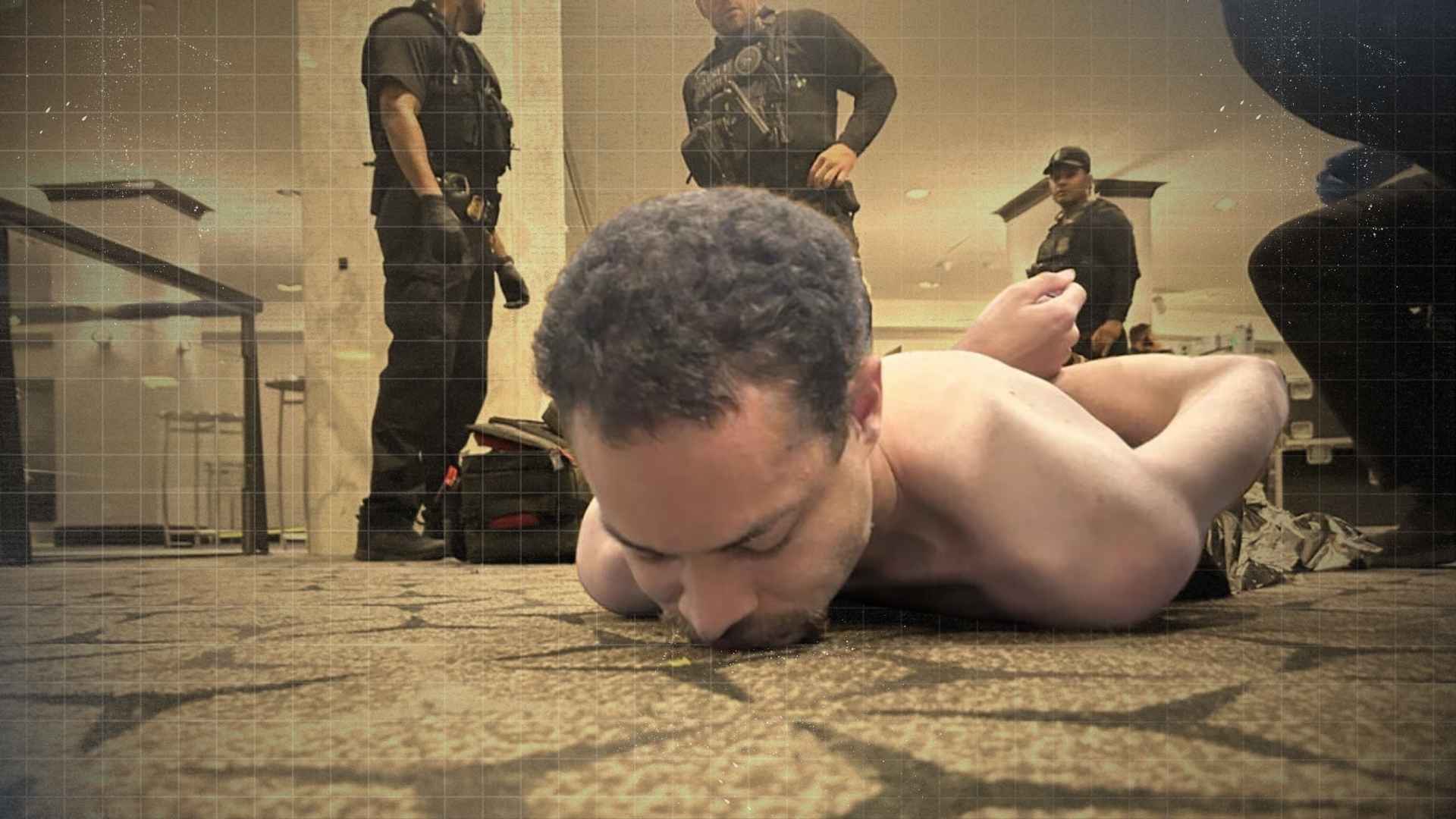
Brazil was shaken this week after former President Jair Bolsonaro was arrested over an alleged plot to escape house arrest—just hours before a massive rally planned by his supporters. Federal police stormed his home early morning, claiming his ankle monitor was tampered with and that the former leader posed a flight risk.

Bolsonaro, a major political figure and ally of former U.S. President Donald Trump, has long been at the center of Brazil’s most divisive political storms. Now he faces a 27-year prison sentence after being convicted of attempting to overturn the democratic process in 2022.
Justice Alexandre de Moraes, a name now echoing across
Brazil, ordered the preemptive arrest. According to him, Bolsonaro’s camp was preparing confusion, chaos, and possibly an escape amidst crowds that were expected at a protest led by his son. Bolsonaro denies all wrongdoing.

The arrest triggered mixed reactions—rage from supporters, cheers from critics, and global concern as Brazil enters a tense political moment ahead of its 2026 elections.
Supporters vow to defend him, calling him a “martyr”, while detractors call the arrest proof of “pathetic illegal initiatives.” The political battlefield is heating up, and once again Brazil is showing the world how high-stakes politics looks in real time.
And as we Filipinos know very well—
When courts, politics, and power collide… the truth becomes the battleground.
Kung sa Pilipinas may mga haters ang Agila, sa Brazil may sarili rin silang bersyon.





Disclaimer: This site uses publicly available images and materials for news, satire, and commentary. All rights belong to their respective owners. No copyright infringement intended.
© 2025 Politikanta Minute. All Rights Reserved.
Political Commentary • Satire • Faith-Based Reflection
Some visuals may be AI-generated for satire and illustration. Not real footage unless stated.