
Unprogrammed appropriations
Decision to veto nearly P92.5 billion in unprogrammed appropriations
Tap to view
👁
Mixed

Your support keeps independent commentary alive.
☕ Buy us a coffee and keep the conversation going


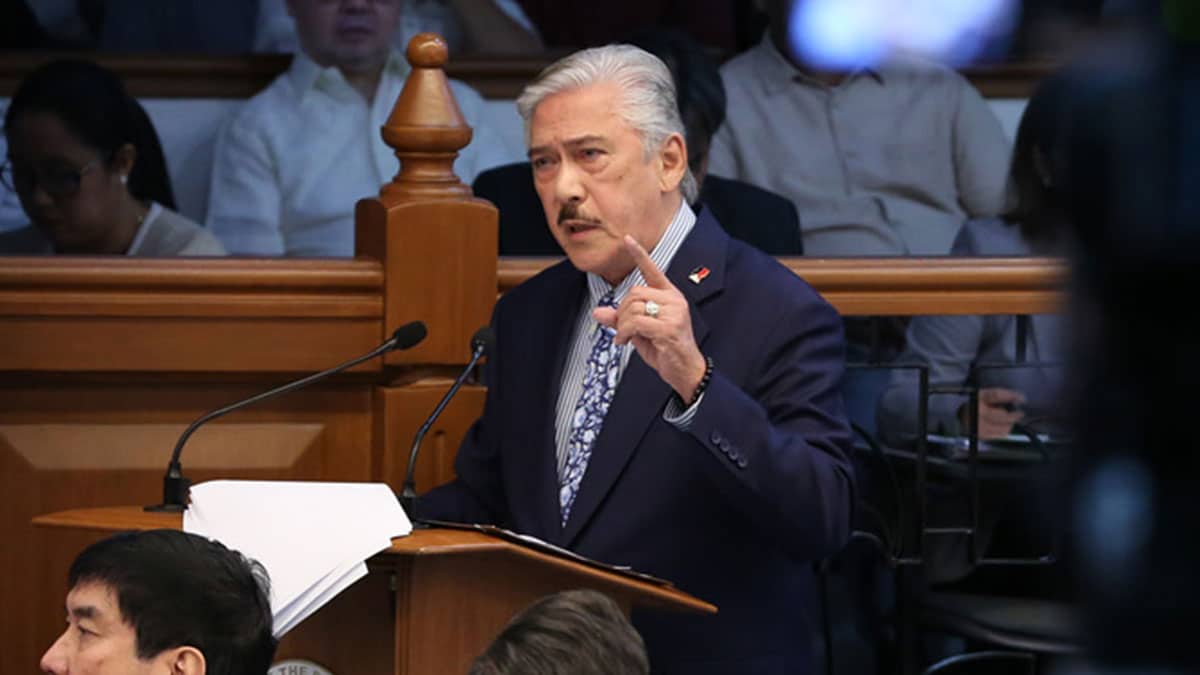
A group referred to as the “Magnificent 7” has reportedly moved to file a contempt action against Tito Sotto, escalating tensions within the Senate’s already fragile political landscape.
While the details of the contempt filing are still developing, the move signals intensifying internal divisions over leadership, procedure, and possibly the handling of sensitive legislative matters.
In legislative proceedings, a contempt citation can arise when an individual is accused of:
Disrespecting Senate authority
Obstructing legislative processes
Failing to comply with procedural rules
However, in political settings, contempt motions can also serve as strategic tools—used to apply pressure, signal dissent, or test leadership strength.
The key question is whether this action is procedural in nature—or political in motive.
The Senate has recently faced:
Leadership rumors
Ouster discussions
Divisions over foreign policy and impeachment matters
Controversies surrounding committee reports
The filing of contempt—if formalized—may reflect deeper dissatisfaction among certain senators regarding decision-making processes.
Sotto’s leadership has been marked by attempts to maintain institutional stability amid turbulent political currents. However, critics argue that some of his recent positions have sharpened factional lines rather than softened them.
Supporters, meanwhile, frame him as defending Senate independence and procedural order.
The “Magnificent 7” action introduces a symbolic dynamic: a minority bloc challenging authority in a very visible way.
Observers typically look at three indicators when evaluating such moves:
Timing – Is the filing connected to recent controversial rulings or statements?
Numbers – Does the bloc represent a growing coalition?
Intent – Is the goal accountability—or leverage?
Without full documentation, it remains unclear whether the contempt move is grounded in technical violations or broader dissatisfaction.
Public legislative confrontations can have ripple effects:
Investor confidence
Public trust in governance
Perception of political stability
In moments like this, the optics often matter as much as the substance.
If the contempt motion proceeds formally, it may force the Senate to clarify procedural standards and reaffirm institutional rules.
If it stalls, it could be interpreted as a symbolic protest rather than a structural challenge.
The Philippines is navigating multiple high-profile political tensions:
Impeachment debates
Foreign policy disputes
Anti-corruption investigations
Leadership realignments
The Senate is not insulated from these currents. Internal maneuvers often mirror national political polarization.
Those critical of Sotto’s recent posture suggest that leadership requires not only firmness but also coalition management. Political capital can erode if internal alliances weaken.
Others argue that firmness is necessary during periods of external and internal pressure.
The contempt filing, regardless of outcome, underscores one reality:
The Senate is operating in a climate of heightened political sensitivity.
Ecclesiastes 3:7 — “A time to be silent and a time to speak.”
Leadership involves knowing the difference.










Disclaimer: This site uses publicly available images and materials for news, satire, and commentary. All rights belong to their respective owners. No copyright infringement intended.
© 2025 Politikanta Minute. All Rights Reserved.
Political Commentary • Satire • Faith-Based Reflection
Some visuals may be AI-generated for satire and illustration. Not real footage unless stated.
