
Return 2 Sport
BLOG
All things running, physical therapy, strength training, mobility, and education!
Welcome to the Return 2 Sport PT blog. Here, we share insights and tips to improve your movement quality, alleviate pain and dysfunction, and equip you with the knowledge to maintain a pain-free and active lifestyle for the long haul.
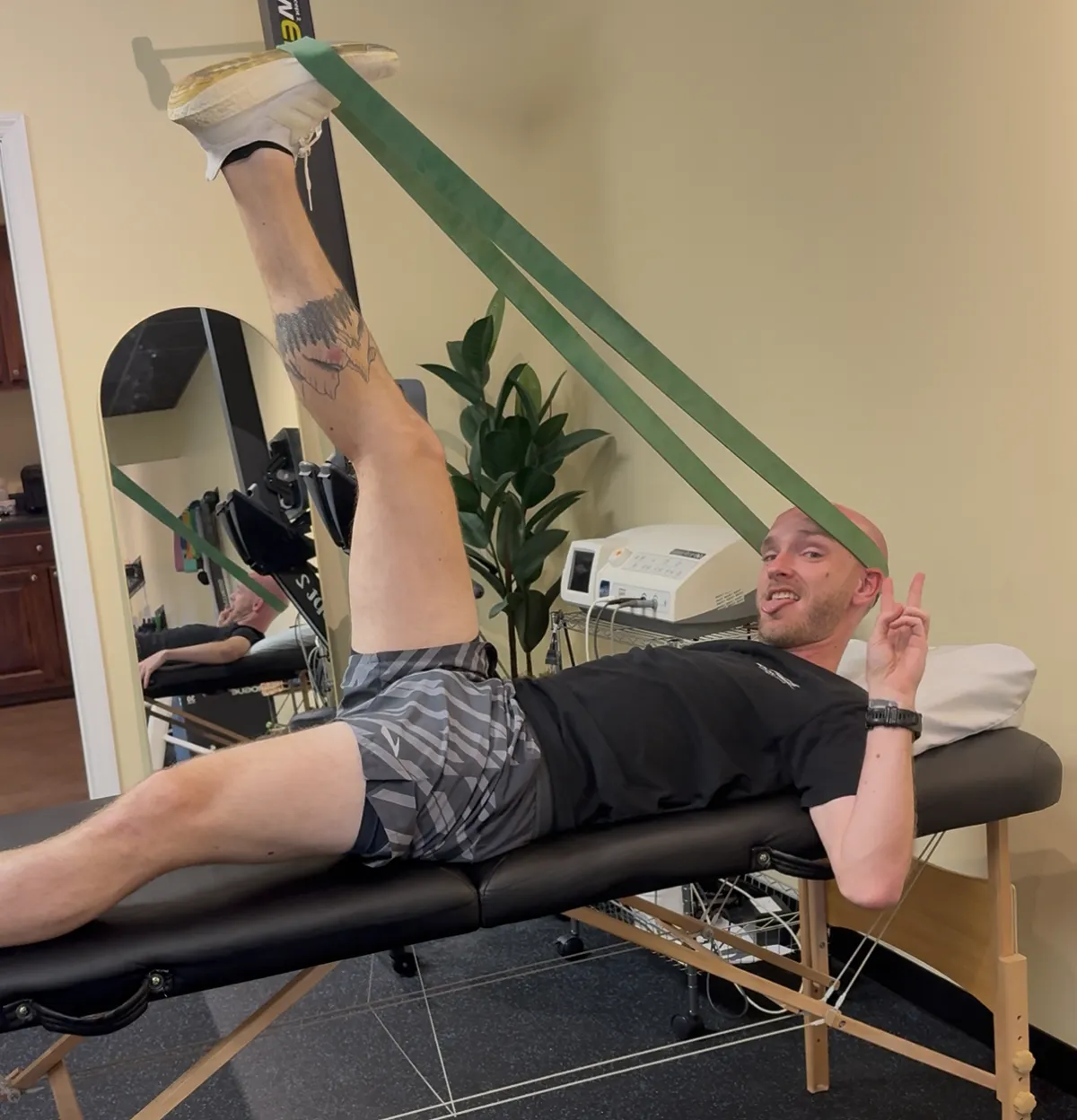
What is Neural Tension and is it Causing my Problems?

What is Neural Tension and is it Causing my Problems?
Do you keep having random injuries pop up or are they a recurring theme in training? Things that seem to not get better with the normal approach of simple PT exercises for the painful area? This may be you, so take a little time to read and find out how to solve the problem for good.
What is neural tension?
Neural tension is what happens when our body has adaptive shortening of the nerves, typically as a result of prior injury, lack of maintained mobility, or increased physical stress without recovery.
When our body isn’t asked to move in a dynamic full range of motion it doesn’t. That means that there is no magical elasticity of the muscles, nerves, or fascia beyond the stresses that our environment produces. If your environment is an office chair and a run or lift here or there, how do you think that’s gonna look after a while?
While stretching muscles generally is helpful, you need to move more specifically to improve neural tension. If you think of the muscles and the nerves as two separate but very adaptable and responsive systems you will see the difference. Most people with neural tension just think they have tight hamstrings, calves, hips, low back, etc. and they probably do, but as a result of what? And they’ve tried all the stretches to no avail so what is the missing component? Enter neural tension.
If we can take a comprehensive approach and focus on these 3 different things we can solve this problem for any part of the body:
Muscular/capsular mobility
Neural tension
Dynamic loading
Step one is identifying the tight areas mechanically. This should be rather easy and we can help you parse this out if you’re at a loss.
Step two is assessing and implementing neural tension exercises to create neural adaptations that will transform your body over time.
Step three is making your body move through dynamic ranges of motion while loading the muscles and nervous system. This is the glue that makes it stick and how you become stronger and more resilient as your body adapts to increased mobility.
What are my favorite neural tension exercises for the lower body and back?
Banded hamstring lockouts
Standing lumbar flexion with weight
Bent over toe lifts and elephant walks
Are there more? Of course, but these are my current favorites. And these are not the only things you’d need to be focusing on. There needs to be a focus on all three categories of muscular/capsular mobility, neural tension, and dynamic loading/mobility for optimal results.
Things that can be caused by neural tension?
Everything!
How do I find out if I have neural tension?
Lie down flat on your back, interlock your fingers behind one knee and then try to straighten your leg towards the ceiling. If you can't straighten it out or have pain down the leg, you have neural tension and it needs to be addressed!
More questions? Call or text us at 256-513-9525 or click the link below to book a phone consult with us today.
Happy running,
R2S Team
Book FREE 15- Minute Phone Consultation
Also, If you are dealing with an injury and need help or would like to optimize your performance and recovery with some professional help, book a phone consultation below!
We also provide:
Dr. Dylan Glass, PT, DPT, SMTC
Dr. Josh Cornett PT, DPT, COMT, CDNT
Return 2 Sport PT
256-513-9525




Copyright (C) 2026 Return 2 Sport PT & Performance. All
rights reserved.

At Return 2 Sport PT & Performance, we specialize in performance-based physical therapy.
© 2025 Return 2 Sport PT & Performance All Rights Reserved |