
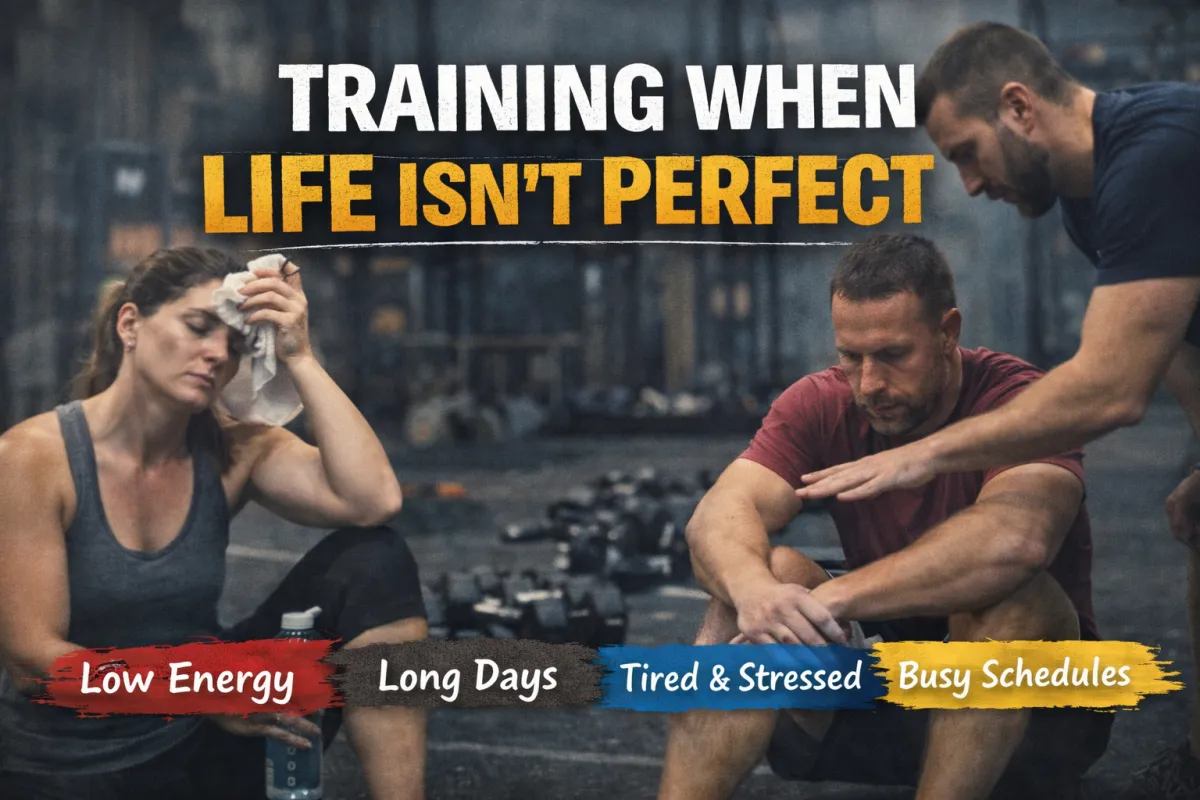
Training When Life Isn’t Perfect
Most people treat exercise like a reward.
They’ll train:
When work isn’t overwhelming
When sleep has been good
When stress is low
When the kids’ schedules aren’t chaotic
But the problem with that is...
Life rarely stays calm for long.
If training only happens during perfect weeks, progress becomes inconsistent, and consistency is what actually drives results.
The Myth of the “Right Time”
There’s a common belief that things will settle soon.
That next month will be quieter.
That after this project finishes, training will be easier.
That once the kids’ activities slow down, there’ll be more space.
Sometimes that happens.
Often, it doesn’t.
Life moves in waves and waiting for calm conditions usually means waiting indefinitely.
What Consistent People Do Differently
The people who maintain their health long-term don’t have fewer responsibilities.
They’ve just learned to adjust their approach.
When energy is low:
They reduce intensity
They scale movements
They shorten sessions
But they still show up.
They understand something important:
Momentum matters more than perfection.
An average workout maintains the habit.
A lighter session keeps the routine intact.
Skipping entirely makes restarting harder.
Stress Is Exactly When Training Helps Most
During busy or stressful periods, training:
Regulates mood
Improves sleep quality
Reduces mental load
Builds resilience
It becomes less about performance and more about stability.
That’s why training shouldn’t disappear when life gets full. It should adapt.
A Better Standard
Instead of asking:
“Can I train at my best this week?”
Ask:
“What version of training fits this week?”
Maybe that’s:
Two sessions instead of three
Lower loads
Shorter workouts
More movement, less intensity
That still counts.
Consistency isn’t built by heroic weeks.
It’s built by not vanishing during hard ones.
If You’ve Drifted
If you’ve stepped away because life feels messy, that doesn’t mean you’ve failed.
It usually just means expectations were too rigid.
The solution isn’t waiting for a better week.
It’s adjusting your approach for the one you’re in.

Gym Cartel is dedicated to helping all people to appreciate that being active and healthy is one of the greatest gifts of life.

CROSSFIT DESIRE CENTRAL



Copyright ©2024 Gym Cartel Albion. All rights reserved