
Tax-Smart Retirement
Protected Legacy.
Aion Retirement strategies built on values, trust, and clarity.
We help you coordinate Roth conversions, RMD planning, and tax-bracket management to reduce lifetime taxes, avoid unnecessary IRMAA costs, protect surviving spouses, and preserve more wealth for the people who matter most.

Empower Your
Financial Future
Navigate the complexities of retirement planning with confidence. We take the time to
share the risks and possibilities you face in your retirement and give you the information
to make empowered and educated decisions.

Vetted Fiduciaries
at Your Fingertips
We understand the importance of trust when it comes to your finances. Rest easy knowing that all Aion Retirement advisors are vetted fiduciaries, legally bound to act in your best interest. Local or nationwide, we've got you covered.

Your Journey,
Your Terms
Take control of your financial journey by reviewing your choices at your leisure. Speak with advisors at no cost to you, ensuring you find the perfect fit for your retirement plans.
Build Your Dream
Build Your
Dream
Start Your Financial
Journey Today
Mark Connell grew up in a Marine Corps fighter pilot home, living in five states and moving seven times by the age of 13 when his family settled in Plano, Texas. In addition to a disciplined upbringing, his childhood taught him how to make friends quickly and easily! Mark is a son, husband, dad, and grandfather, and truly loves serving people.
With over 15 years of industry experience, Mark began his financial services career in the early 2000s with a national broker-dealer earning his securities license Series 7, 6, 63 and 65, as well as his insurance license. He quickly moved into comprehensive financial planning and earned the CERTIFIED FINANCIAL PLANNER (CFP™) designation. Mark started and owned his own Registered Investment Advisory (RIA) firm, then moved into Wealth Management with Capital Advisory Group where Mark served clients, managed portfolios and oversaw operations. After a hiatus from the financial sector, Mark returned to financial services seeing a significant need for preservation and distribution solutions for retirees and those approaching retirement.


52%
of US households might not be able to afford essential expenses in retirement. A reminder to plan ahead, folks!
☀️☔

19.2
Retiring at 65? Hold on to your passport! The average life expectancy of 65-year-olds is 19.2 years, giving you plenty of time to chase sunsets and tick travel goals off your bucket list.✈️

61?
The real retirement age: Don’t let 65 fool you. Surveys show the actual average retirement age is 61, so plan your financial freedom accordingly.
31%
Buckle up, workforce! The number of pre-retirees (45-64) grew a whopping 31% in the past decade, meaning more folks are approaching the finish line.
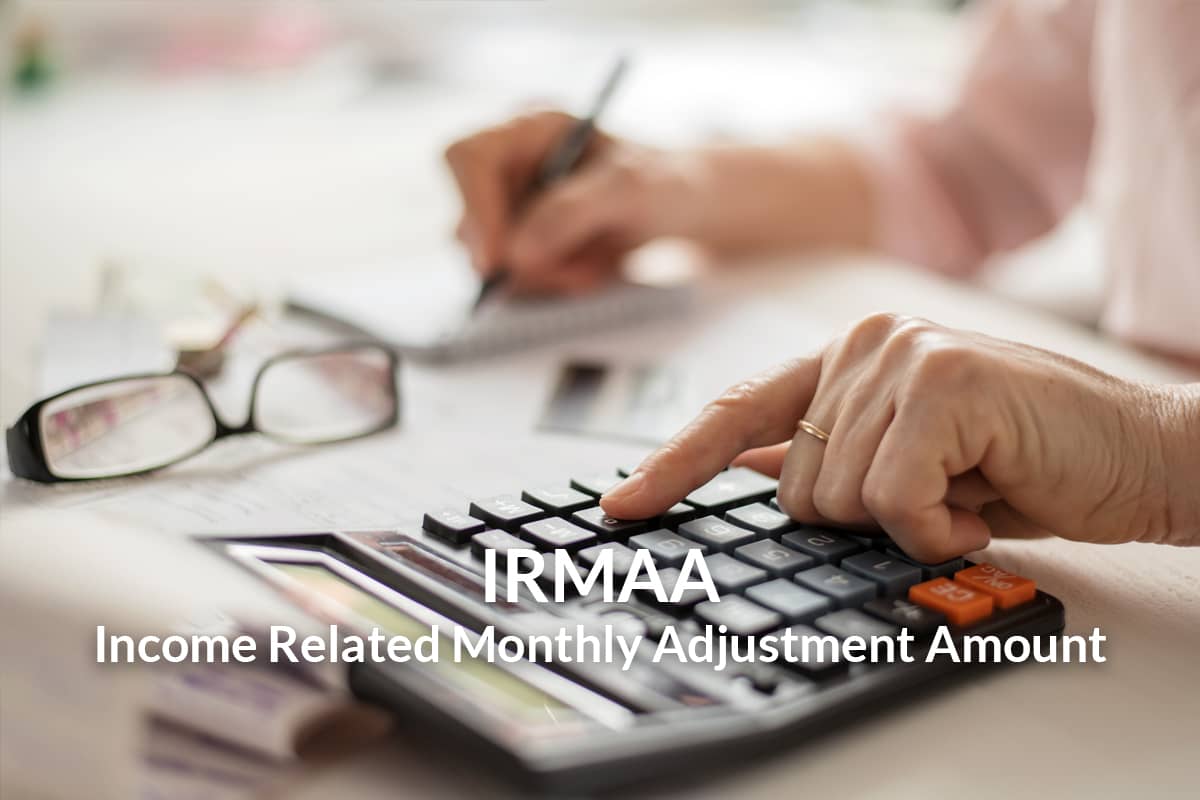
IRMAA (Income-Related Monthly Adjustment Amount)
IRMAA is a surcharge added to Medicare
Part B and Part D premiums when a retiree’s income exceeds certain IRS thresholds. Medicare looks at your Modified Adjusted Gross Income (MAGI) from two years prior.
Potential Negative Impact on Retirement Income:
Higher Medicare premiums can cost thousands of dollars per year
Income spikes (Roth conversions, RMDs, asset sales) can unexpectedly trigger IRMAA
Reduces net retirement cash flow without providing additional benefits
Can create a “tax cliff” where earning slightly more leads to much higher costs
RMD (Required Minimum Distribution)
RMDs are mandatory withdrawals from most tax-deferred retirement accounts (like traditional IRAs and 401(k)s), beginning at age 73 (current law).
Potential Negative Impact on Retirement Income:
Forced withdrawals may push retirees into higher tax brackets
Can increase Social Security taxation and trigger IRMAA
Reduces tax-deferred growth prematurely
Withdrawals may not be needed for spending, creating unnecessary tax exposure


Widows / Widowers Penalty
After a spouse dies, the survivor shifts from Married Filing Jointly to Single, often while keeping similar income levels.
Potential Negative Impact on Retirement Income:
Tax brackets compress, causing higher taxes on the same income
RMDs and pensions remain high, but deductions and brackets shrink
IRMAA thresholds are lower for single filers
Survivor may lose one Social Security check but keep most expenses
Marginal Tax Bracket Management
A tax-planning strategy that intentionally controls how much taxable income you realize each year to avoid jumping into higher tax brackets.
Potential Negative Impact if Ignored:
Paying more tax than necessary over a lifetime
Poor timing of withdrawals can cause:
→ Higher Medicare premiums
→ Increased Social Security taxation
→ Lost opportunities for low-tax Roth conversions
Can permanently reduce after-tax retirement income


IRA (Traditional Individual Retirement Account)
A tax-deferred retirement account where contributions may be deductible and withdrawals are taxed as ordinary income.
Potential Negative Impact on Retirement Income:
All withdrawals are fully taxable
Subject to RMDs, even if income isn’t needed
Can cause higher taxes later in retirement
Large balances increase exposure to IRMAA and widow(er) penalties
Roth IRA
A retirement account funded with after-tax dollars, allowing tax-free growth and tax-free withdrawals if rules are met.
Potential Negative Impact (If Not Used or Used Improperly):
Not contributing early may lead to lost tax-free growth
High-income retirees may miss Roth conversion opportunities
Overconverting can trigger higher tax brackets or IRMAA
Lack of Roth assets reduces flexibility in retirement income planning


The SECURE Act eliminated the “stretch IRA” for most non-spouse beneficiaries, requiring inherited IRAs to be fully withdrawn within 10 years.
Potential Negative Impact on Retirement Income & Legacy:
Heirs may face large tax bills during peak earning years
Accelerated withdrawals increase marginal tax rates for beneficiaries
Reduces the long-term value of inherited retirement assets
Poor planning may unintentionally transfer wealth to the IRS instead of heirs

Big Picture Takeaway
These concepts are interconnected. Poor planning in one area (RMDs, taxes, IRMAA) often triggers problems in others. Strategic coordination can:
Potential Negative Impact on Retirement Income & Legacy:
Increase lifetime after-tax income
Reduce Medicare costs
Protect surviving spouses
Preserve more wealth for heirs
Let’s talk about your Insurance goals.
YOUR ONE-STOP-SHOP FOR
FINANCIAL Confidence
RETIREMENT
Confidence

Retirement
Our tools and guides demystify retirement planning, providing simple and approachable answers to your most pressing questions.

Taxes
Understanding your taxes is crucial. Our top-notch tools and articles provide the tax information you need, making it easier for you to stay financially savvy.
Let’s talk about your Retirement goals.
Clients
Build Your Dream
Testimonials
WHAT OUR Clients ARE SAYING...



Whether you’re seeking a financial
advisor or exploring our free and personalized financial calculators, Aion Retirement is your go-to destination
for a secure and confident retirement. Let’s shape your financial future together.
Quick Links
© Aion Retirement All Rights Reserved 2025