


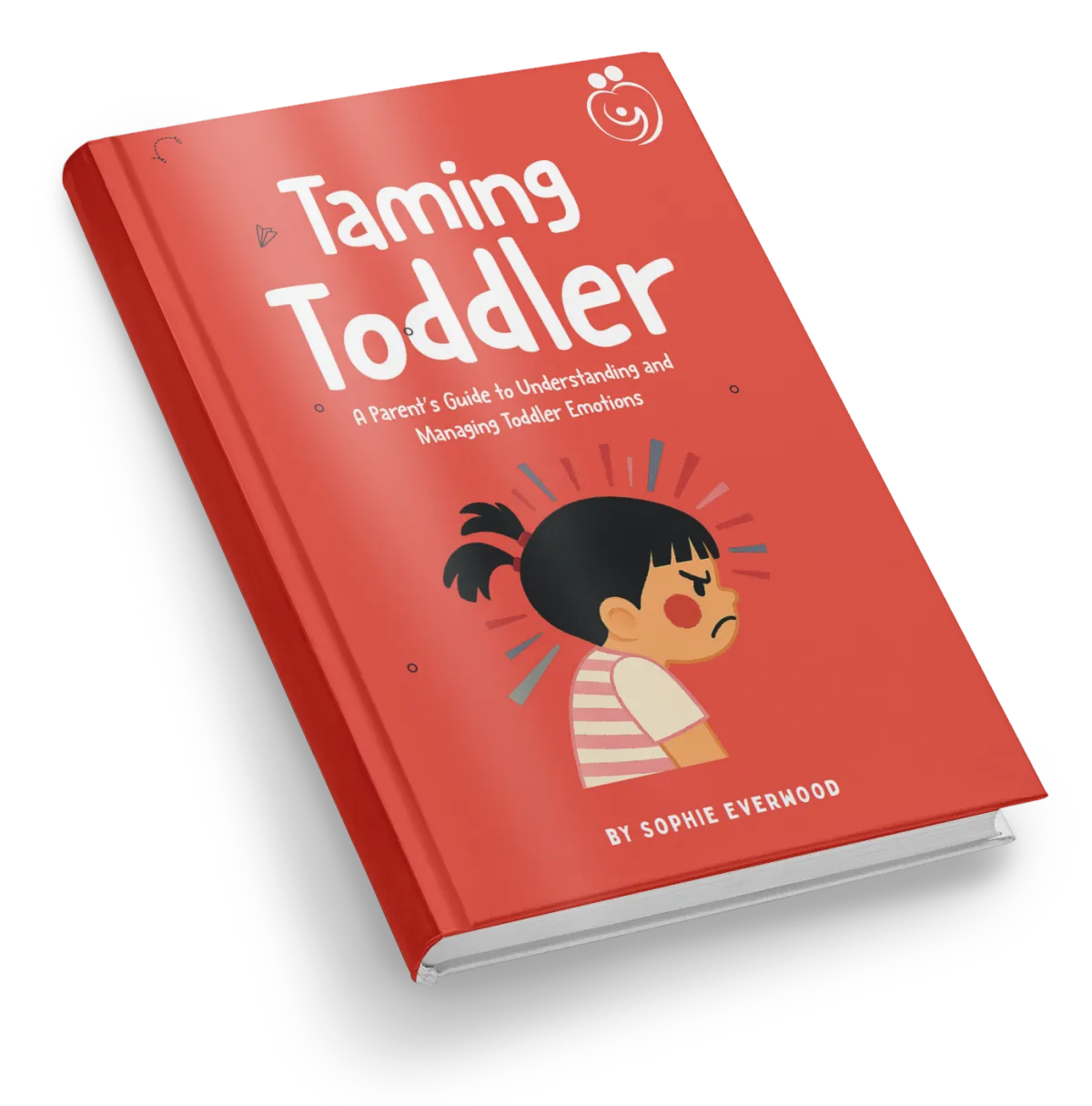
Taming Toddler
A 30-page guide to understanding what's behind your toddler's meltdowns — and reducing how often they happen.
Most meltdowns don't start at the meltdown
The missed nap. The overstimulating morning. The hunger that crept
in over the last hour.
By the time your toddler's brain is asked to handle one more small
thing — a transition, a "no," a lid on a bottle — the load is
already too heavy. Something small tips it over, and you're left
wondering how a water bottle became a catastrophe.
It wasn't about the water bottle.
It was about everything that came before it.
Once you can see the load building, you stop being surprised by the
meltdown. And you start to know exactly where to step in.
A simple four-step method for calmer days
The Lighter Load Method™ gives you four places to intervene across a day — not just in the middle of a meltdown, but before, during, and after.

What's inside Taming Toddler
Taming Toddler is for you if...
Your toddler's meltdowns feel bigger than the thing that set them off, and you're starting to wonder if something is wrong with your child, or with you.
You've read the gentle parenting posts. You've tried staying calm. Some days it works, most days it doesn't, and by evening you don't have anything left.
You don't want scripts that feel performative. You want to actually understand what your child is doing — so the tools you use feel like yours, not someone else's.
You're tired of guessing. You want something simple enough to use on the hard days, and small enough to read while the kids nap.
If any of that sounds like your house, this guide was written for you.
A note from Sophie
I wrote Taming Toddler because I spent too long feeling like I was failing the evenings.
I'd stay calm through the day and lose it by six. I'd read the parenting books and still be sitting on the kitchen floor at bedtime wondering what I did wrong.
The thing that changed everything for me wasn't a new technique. It was finally understanding that by the time my daughter was falling apart, the meltdown had been a long time coming. Once I could see the load building earlier in the day, I could do something about it.
This guide is what I wish I'd had then. It's the calmer, clearer version of everything I was trying to piece together.
I hope it helps you as much as it's helped me
Parent. Author.
What's included when you get Taming Toddler
Try it for 30 days
Read the guide. Try the approaches when meltdowns happen. If it doesn't help you feel clearer about what's happening and what to try, email me and I'll refund you. No forms. No hoops. No guilt.
This guarantee is in addition to any rights you may have under consumer law.