

Most tantrums don't start where they explode.
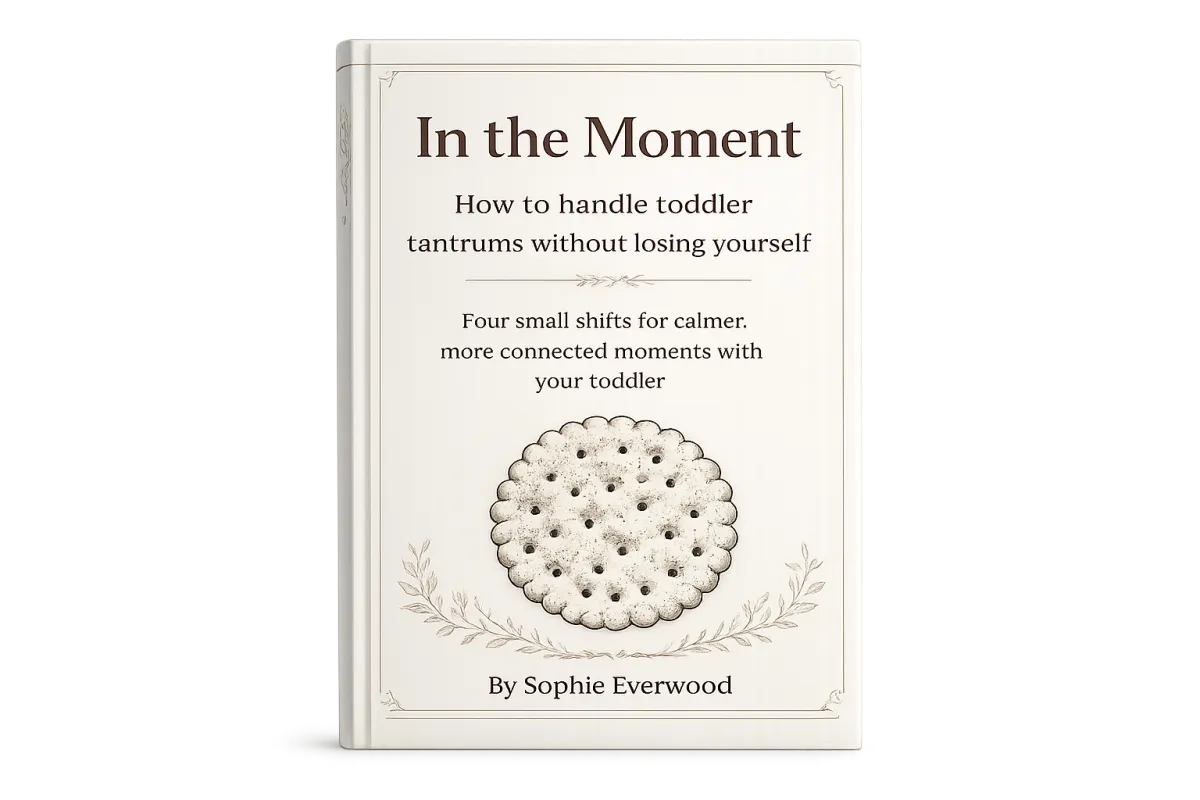
A free 8-page guide for the moments when your toddler is losing it, and you're trying not to lose yourself too.
By the time your toddler is screaming over a cracker, a missing bowl, or a shoe that won't go on, the moment has usually been building for longer than either of you realized. This guide is four small shifts for what to do when the meltdown is already happening. Read it in about ten minutes after the kids are down.
The trigger isn't usually the cause.
I didn't understand for a long time why my daughter was melting down over things that looked ridiculous from the outside. The cracker she'd already eaten. The bowl in the wrong colour. The shoe that wouldn't go on.
I tried to fix the thing. I offered another cracker. I explained that the bowl was fine. None of it helped.
What I came to see was that the visible trigger was usually just the place where the day came out. A missed nap, an overstimulating morning, a hunger that had been creeping in for an hour. By the time my daughter was screaming over the cracker, there wasn't much room left in her for anything else.
The question I'd been asking — how do I make this stop right now — wasn't really the right question.
What helped was a different one. What can I do in this moment that doesn't add more load?
This guide is one piece of how I learned to answer it. The bigger version is something I call The Lighter Load Method™.
What's in the guide.
In the Moment is a short PDF — about ten minutes to read. It's not a list of scripts. It's not a set of magic phrases. It's four small shifts for the part of the meltdown where reasoning has stopped working and your own patience is starting to disappear.

Start with your own body.

Less words. Closer presence.

Stay close, even when it doesn't make sense.

Come back together after.
Each one is anchored in a real parenting moment. A cracker. A pineapple in the produce aisle. A bowl that was the wrong colour for reasons no one could explain. A broken crayon and a hug afterwards.
You can read it in one sitting.
Not more advice to remember while everything is falling apart.
Most tantrum advice asks you to perform calm at the exact moment you feel least calm. Say the right thing. Use the right script. Keep your voice gentle. Don't react.
That can leave parents feeling like they failed twice — once because the meltdown happened, and again because they didn't handle it perfectly.
This guide is quieter than that. It gives you a direction, not a performance.
Breathe out before you breathe in. Get low. Stay nearby. Reconnect afterwards.
Small things. But small things are usually what you can actually reach for in the middle of a hard moment.
A note from Sophie.
I wrote this because I remember how lonely tantrums can feel — the noise of them, and the second-guessing afterwards. Was I too soft. Too strict. Did I make it worse. Is this normal.
This is what I wish someone had handed me back then. Not a perfect plan. Not a promise that tantrums disappear. Just a calmer way to understand what's happening, and a few small things to reach for when the moment gets loud.