
Patient Portal
Origins Integrative Health

Regenerative
Aesthetics: Pelvic Pain
Regenerative Approaches
to Chronic Pelvic Pain
Hair
PRP for Hair Restoration — Awakening Your Follicles' Natural Potential
Beyond pain management — addressing the neurological root of pelvic pain neural therapy for chronic pelvic pain and dysfunction
Neural Therapy for Chronic Pelvic Pain & Dysfunction
Chronic pelvic pain is one of the most complex, underdiagnosed, and undertreated conditions in medicine — affecting millions of people and profoundly impacting quality of life, intimacy, and daily function. Despite its prevalence, many patients spend years navigating a fragmented healthcare system without finding lasting relief — receiving treatments that address symptoms without ever investigating the underlying neurological and structural drivers of their pain.
At Origins Integrative Health, we take a different approach. We offer Neural Therapy as a targeted, evidence-informed regenerative treatment for chronic pelvic pain — addressing the autonomic nervous system dysfunction, scar tissue interference, and neurogenic inflammation that are so frequently at the root of pelvic pain conditions that have not responded to conventional care.
Evidence-Informed Treatment for Thinning Hair & Alopecia
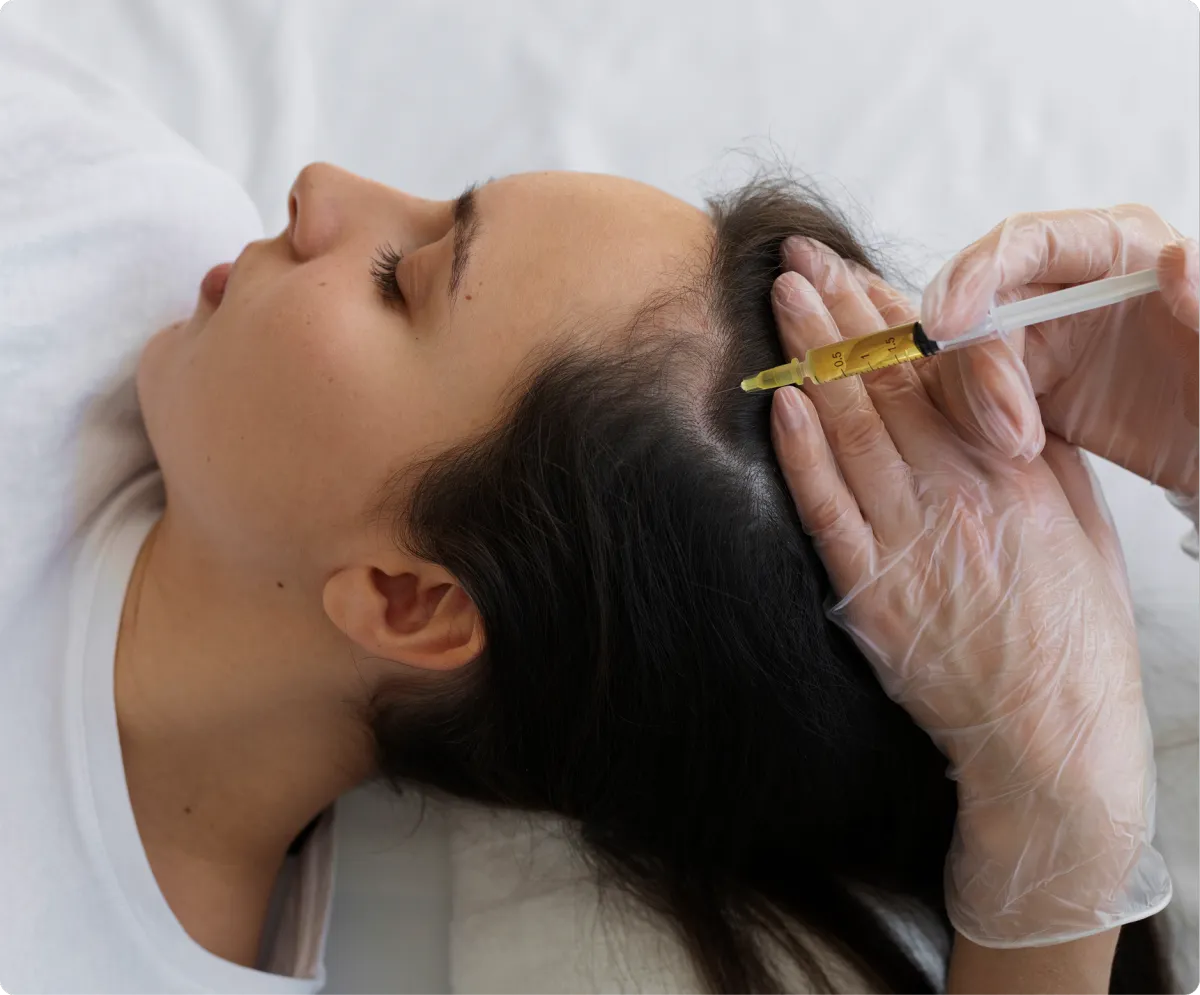
Hair loss is one of the most common and emotionally significant health concerns affecting both men and women — and one that conventional medicine has historically offered limited solutions for. At Origins Integrative Health, we offer Platelet-Rich Plasma (PRP) therapy for hair restoration — an evidence-informed, biologically intelligent approach that works with your body's own healing capacity to stimulate follicle health, slow hair loss, and encourage meaningful regrowth.
This is not a surface treatment. PRP for hair restoration works at the level of the hair follicle itself — delivering concentrated growth factors precisely where they are needed to reawaken dormant follicles, improve scalp circulation, and create the biological conditions your hair needs to grow.
How PRP Stimulates
Hair Growth
The hair follicle is a remarkably dynamic structure — and one that is highly responsive to the growth factors concentrated in platelet-rich plasma. When PRP is injected into the scalp, it delivers a potent combination of growth factors — including PDGF, VEGF, IGF-1, and EGF — directly to the follicular unit and surrounding dermal papilla cells.
These growth factors stimulate follicular stem cells, promote angiogenesis (the formation of new blood vessels) to improve follicle nutrition, extend the anagen (growth) phase of the hair cycle, and shift follicles from the telogen (resting) phase back into active growth. The result is a measurable improvement in hair density, diameter, and overall scalp health — achieved through your body's own biological resources.
What the Research Shows
PRP for hair loss has been studied extensively across multiple randomized controlled trials and systematic reviews — consistently demonstrating meaningful clinical benefit. A systematic review and meta-analysis published in the Journal of Cosmetic Dermatology found that PRP therapy produced significant improvements in hair density, hair diameter, and the anagen-to-telogen ratio compared to placebo controls. A randomized controlled trial published in Dermatologic Surgery demonstrated that patients receiving PRP injections showed a mean increase of 33.6 hairs per cm² at six months — a clinically significant result with no serious adverse effects reported. Research has also shown that PRP is particularly effective for androgenetic alopecia — the most common form of hair loss in both men and women — as well as alopecia areata, telogen effluvium, and hair thinning associated with hormonal changes.
Understanding pelvic pain —
The neurological perspective
Chronic pelvic pain rarely has a single cause. It is most often the result of a complex interplay of factors — including prior surgery, trauma, infection, hormonal changes, and accumulated neurological interference — that together create a state of persistent pain sensitization and autonomic nervous system dysregulation in the pelvic region.
The pelvis is richly innervated by both the somatic and autonomic nervous systems — making it particularly susceptible to the kind of neurological interference that neural therapy is uniquely equipped to address. Scar tissue from prior surgeries — including cesarean sections, hysterectomies, appendectomies, laparoscopies, and episiotomies — can create persistent interference fields that disrupt normal autonomic signaling, alter tissue perfusion, restrict fascial mobility, and perpetuate chronic pain patterns far beyond the original site of injury.
Similarly, prior infections, endometriosis-related adhesions, and pelvic inflammatory conditions can create chronic states of neurogenic inflammation and autonomic dysregulation that manifest as persistent pelvic pain — even in the absence of active disease.
What is neural therapy?
Neural Therapy uses precise injections of procaine — a short-acting local anesthetic — to reset disrupted signals in the autonomic nervous system and eliminate interference fields that perpetuate chronic pain. Procaine works by temporarily blocking abnormal electrical activity in dysfunctional tissue — restoring normal autonomic signaling, improving local circulation, reducing neurogenic inflammation, and creating the conditions for genuine tissue healing.
Neural therapy was developed in Europe in the early twentieth century and has been practiced extensively in Germany, Switzerland, and throughout Latin America for decades — accumulating a substantial body of clinical experience and a growing evidence base supporting its use for chronic pain conditions, including pelvic pain.
How neural therapy addresses pelvic pain
At Origins, neural therapy for pelvic pain is applied with precision and care — targeting the specific structures and interference fields most likely to be contributing to each patient's unique pain pattern. Applications include:
Scar treatment
Scars from prior pelvic or abdominal surgeries — including cesarean sections, hysterectomies, laparoscopies, appendectomies, and episiotomies — are among the most common and most overlooked contributors to chronic pelvic pain. Scar tissue can restrict fascial mobility, alter tissue perfusion, compress adjacent nerves, and create persistent interference fields that disrupt autonomic signaling throughout the pelvis.
Procaine injections into and around scar tissue work directly on the scar to restore normal tissue function, improve local circulation, release fascial restriction, and eliminate the neurological interference that the scar has been generating. Many patients experience significant and sometimes immediate improvements in pelvic pain following scar treatment with neural therapy — including patients whose pain had been present for years or decades following surgery.
Autonomic nervous system reset
Chronic pelvic pain is frequently associated with autonomic nervous system dysregulation — a state in which the nervous system has become locked in a pattern of chronic activation that perpetuates pain, muscle tension, and tissue dysfunction. Neural therapy targets specific autonomic ganglia and relay stations — including the superior and inferior hypogastric plexus — to reset dysfunctional autonomic patterns and restore normal neurological regulation of the pelvic region.
Neurogenic Inflammation Neurogenic inflammation — inflammation driven by sensitized or dysfunctional peripheral nerves rather than by active tissue injury — is a central mechanism in many chronic pelvic pain conditions. Procaine injections work through their potent anti-inflammatory and membrane-stabilizing properties to reduce neurogenic inflammation, calm sensitized nerves, and interrupt the perpetuation of chronic pain at its neurological source.
Neurogenic inflammation
Neurogenic inflammation — inflammation driven by sensitized or dysfunctional peripheral nerves rather than by active tissue injury — is a central mechanism in many chronic pelvic pain conditions. Procaine injections work through their potent anti-inflammatory and membrane-stabilizing properties to reduce neurogenic inflammation, calm sensitized nerves, and interrupt the perpetuation of chronic pain at its neurological source.
Trigger points and myofascial pain
Chronic pelvic pain is frequently accompanied by significant myofascial dysfunction — including trigger points in the pelvic floor, hip flexors, adductors, and abdominal muscles that contribute to pain, sexual dysfunction, and movement limitation. Neural therapy can be applied directly to myofascial trigger points in the pelvic region — providing targeted relief from muscle-related pain components alongside the broader autonomic and neurological treatment.
SIGNIFICANT STUDIES
What the research shows
Neural therapy has been studied in the context of chronic pelvic pain with encouraging results. Clinical evidence from European research centers — where neural therapy has been practiced for decades — demonstrates meaningful improvements in pain scores, pelvic function, and quality of life in patients with chronic pelvic pain treated with procaine injection therapy. Case series and clinical reports have documented significant improvements in patients with post-surgical pelvic pain, endometriosis-related pain, interstitial cystitis, and pelvic floor dysfunction following neural therapy — including patients who had not responded to conventional pain management approaches.
Research has also demonstrated that treatment of abdominal and pelvic scars with neural therapy can produce meaningful improvements in remote pain conditions — reflecting the role of scar interference fields in the perpetuation of chronic neurological pain beyond the immediate surgical site. A growing body of literature supports the use of procaine injection therapy as a safe, well-tolerated, and clinically meaningful approach for patients with chronic pelvic pain refractory to conventional treatment.
What your care may include
Comprehensive pelvic pain assessment and individualized treatment planning
Neural therapy — targeting scars, autonomic ganglia, trigger points, and interference fields
Scar treatment — addressing prior surgical and traumatic scars contributing to pelvic pain
Autonomic nervous system reset — targeting hypogastric plexus and pelvic autonomic relay stations
Trigger point injections for myofascial pelvic pain components
Integration with naturopathic medicine — addressing hormonal, inflammatory, and nutritional contributors to pelvic pain
Acupuncture as a complementary approach to pelvic pain management
Counseling support for the emotional and psychological dimensions of chronic pelvic pain
Mayan Abdominal Massage — supporting pelvic circulation, fascial mobility, and uterine health
Coordination of care with your gynecologist, urogynecologist, or pelvic floor physical therapist as appropriate
WE’RE HERE FOR YOU.
Conditions we support
Pelvic pain conditions
Chronic Pelvic Pain
Pelvic Floor Dysfunction
Vulvodynia & Vestibulodynia
Vaginismus
Dyspareunia (Painful Intercourse)
Interstitial Cystitis & Bladder Pain Syndrome
Pudendal Neuralgia
Endometriosis and hormonal pain
Endometriosis-Related Pelvic Pain
Adenomyosis
Hormonal Pelvic Pain
PCOS-Related Pelvic Discomfort
Painful Menstruation (Dysmenorrhea)
Post-surgical and scar-related pain
Post-Cesarean Section Pain & Scar Dysfunction
Post-Hysterectomy Pelvic Pain
Post-Laparoscopy Pain
Post-Episiotomy Pain & Scar Tissue
Post-Appendectomy Abdominal Pain
Post-Surgical Adhesions & Adhesion-Related Pain
Bladder and urological pain
Interstitial Cystitis
Painful Bladder Syndrome
Urinary Urgency & Frequency
Chronic Urethritis
Neurological and referred pain
Pudendal Neuralgia
Iliohypogastric & Ilioinguinal Nerve Pain
Genitofemoral Neuralgia
Referred Hip & Groin Pain
Coccydynia (Tailbone Pain)
A Note About Our Approach to Pelvic Pain
At Origins, we understand that chronic pelvic pain is not just a physical experience — it is an emotional one. Pelvic pain can affect intimacy, self-image, relationships, and quality of life in ways that are deeply personal and often difficult to discuss. We approach every patient navigating pelvic pain with sensitivity, compassion, and the deep respect that this condition deserves.
Our goal is not just to reduce your pain — it is to help you reclaim your life. And we are here to walk alongside you every step of the way.
GET STARTED
Ready to find your root cause?
Your health story deserves more than a surface-level answer. Let’s go deeper – together.
CONDITIONS WE SUPPORT
Androgenetic Alopecia (Male & Female Pattern Hair Loss) · Alopecia Areata · Telogen Effluvium · Hormonal Hair Loss · Postpartum Hair Loss · Hair Thinning & Reduced Density · Hair Loss Associated With Thyroid Conditions · Hair Loss Associated With Nutritional Deficiencies
What to Expect
Most patients require an initial series of three to four treatments spaced four weeks apart, followed by maintenance sessions every three to six months. Results are typically noticeable at three to six months — with continued improvement over the course of a full treatment year. PRP is safe, well-tolerated, and derived entirely from your own blood — making it one of the most biologically compatible treatments available for hair restoration.
Ready to Find Your Root Cause?
Your health story deserves more than a surface-level answer.
Let's go deeper — together
Testimonials
Hear From Our Patients
Real experiences from real people. At Origins Integrative Health, our measure of success is simple — how our patients feel, heal, and thrive over time.
Origins Integrative Health
1432 SE Ankeny St.,
Portland, OR 97214
Discover
Services
Follow Us


© 2026 Origins Integrative Health.
All rights reserved.
Testimonials
Hear from our patients
Real experiences from real people. At Origins Integrative Health, our measure
of success is simple — how our patients feel, heal, and thrive over time.
Origins Integrative Health
1432 SE Ankeny St.,
Portland, OR 97214
Discover
Services
Sign up for our newsletter
and stay in the know
Get our latest insights to support your journey to better health.
© 2026 Origins Integrative Health. All rights reserved.