
Patient Portal
Origins Integrative Health Blog
Origins Integrative Health

Origins Integrative Health Blog
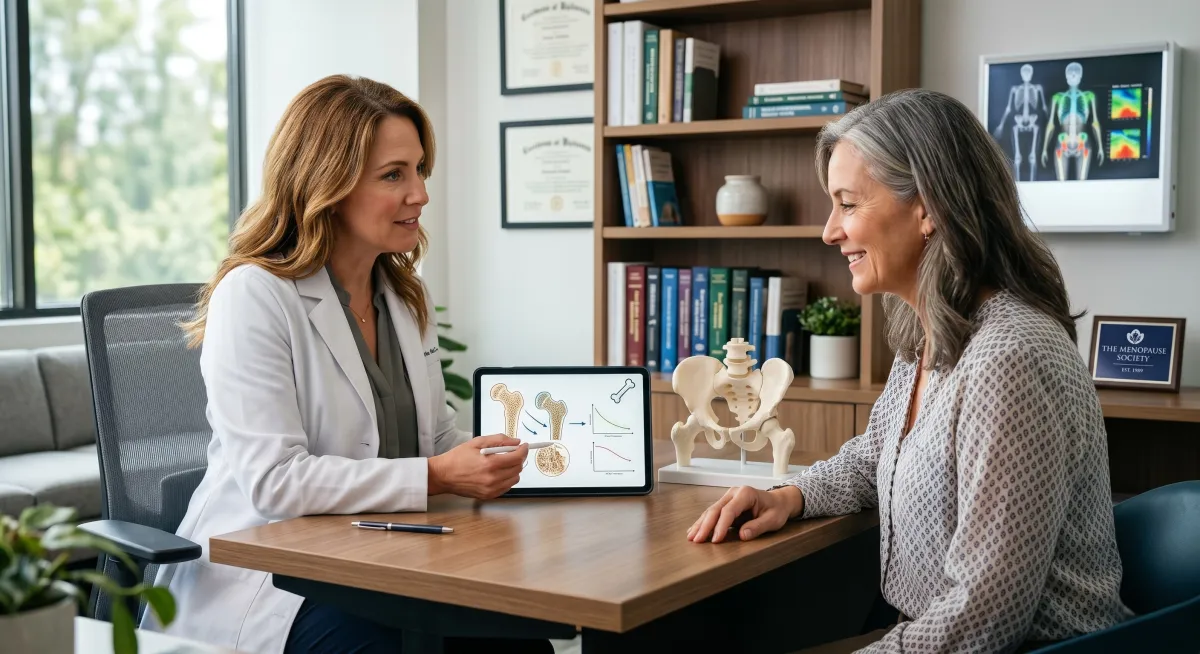
Hormone Replacement Therapy and Bone Health: What the Research Really Says
For women navigating menopause, bone loss is one of the most consequential — and least discussed — health risks. Here's what the latest evidence, including the landmark NAMS 2022 Position Statement, tells us about how hormone replacement therapy can help protect your skeleton for life.
Why Bone Health Becomes Critical After Menopause
Estrogen plays a fundamental role in maintaining bone density. When estrogen levels decline during menopause, the protective effect it has on bone tissue diminishes rapidly. Bone is living tissue that is constantly broken down and rebuilt — a process regulated in large part by estrogen. Without adequate estrogen, bone resorption begins to outpace bone formation, leading to progressive loss of bone density.
This bone loss is most pronounced in the early years after menopause. Studies show that women can lose up to 20% of their bone density in the five to seven years following menopause — a decline that significantly increases the risk of osteopenia, osteoporosis, and fragility fractures. Hip fractures in particular carry serious consequences, with associated increases in morbidity and even mortality.
Key fact: Women who experience early menopause (before age 40) face a particularly elevated risk for osteoporosis and related fractures, and may require earlier, longer-duration intervention to protect bone health.
What The Menopause Society (NAMS) 2022 Position Statement Says
The most authoritative guidance on hormone therapy for menopausal women comes from The North American Menopause Society — now known as The Menopause Society — whose comprehensive 2022 Hormone Therapy Position Statement was developed by an expert Advisory Panel of clinicians and researchers and reviewed by the NAMS Board of Trustees. Published in the journal Menopause (2022 Jul 1;29(7):767–794), this landmark document was endorsed by more than 20 international organizations.
The statement makes several important evidence-based determinations about hormone therapy and bone health:
Hormone Therapy Prevents Bone Loss — Level I Evidence
The 2022 NAMS Position Statement confirms, at the highest level of clinical evidence (Level I), that hormone therapy prevents bone loss in postmenopausal women, with dose-related effects on bone density. The statement further confirms at Level I that hormone therapy reduces fracture risk in healthy postmenopausal women. This is not a tentative finding — it is among the most well-established conclusions in menopause medicine.
The Timing Window Matters
One of the central findings in the 2022 NAMS Position Statement is the importance of the timing of hormone therapy initiation. For women aged younger than 60 years, or who are within 10 years of menopause onset and have no contraindications, the benefit-risk ratio is favorable for hormone therapy — including for the prevention of bone loss. Women in this window who begin HRT gain the most protective benefit for their bones.
Conversely, for women who initiate hormone therapy more than 10 years from menopause onset, or who are aged 60 or older, the benefit-risk calculation shifts — with greater absolute risks of cardiovascular disease, stroke, venous thromboembolism, and dementia factored in. This underscores why early conversations with your provider about bone health and hormone therapy are so important.
The 2022 NAMS Position Statement: Hormone therapy is FDA-approved for the prevention of bone loss in postmenopausal women, though not for the treatment of established osteoporosis. For prevention, early initiation offers the greatest protective benefit.
Special Considerations: Premature Menopause and Surgical Menopause
The NAMS 2022 guidelines give special attention to women with premature or early menopause. Unless contraindicated, women who experience premature menopause without prior fragility fracture or established osteoporosis are best served with hormone therapy — rather than other bone-specific treatments — until the average age of natural menopause (approximately age 52), when the treatment approach can be reassessed.
This recommendation reflects the fact that the WHI trials, which studied older postmenopausal women, do not apply to women with premature ovarian insufficiency or surgical menopause. These women have a longer duration of estrogen deficiency to contend with and stand to benefit considerably from hormonal support.
What Happens When Hormone Therapy Is Stopped?
The 2022 Position Statement also addresses the question of discontinuation. When hormone therapy is stopped, rapid bone loss can resume — though the WHI data did not show an excess in fractures after discontinuation compared to placebo groups. This suggests that while HRT provides active protection during use, the benefits to bone do not immediately reverse upon stopping. Still, decisions about when and how to discontinue therapy should always be made collaboratively with your healthcare provider.
HRT and the Integrative Approach to Bone Health
At Origins Integrative Health, we believe bone health requires a whole-person strategy. Hormone replacement therapy is one powerful tool, but it works best alongside adequate calcium and vitamin D intake, weight-bearing and resistance exercise, smoking cessation, limiting alcohol, and regular bone density monitoring with DEXA scans.
Our providers are well-versed in the nuanced, individualized guidance outlined in the NAMS 2022 Position Statement. We take time to evaluate your full health history, risk factors, and goals — and to help you make an informed decision about whether HRT is the right protective strategy for your bones and your overall health.
Ready to talk about your bone health and hormone therapy options?
Reach out to Origins Integrative Health to schedule a consultation. We offer both in-person and telehealth appointments to fit your life.

Caring for Your Body, Mind,
and Spirit
Caring for Your Body, Mind, and Spirit
Origins Integrative Health
1432 SE Ankeny St.,
Portland, OR 97214
Discover
Services
Follow Us


© 2026 Origins Integrative Health.
All rights reserved.
Origins Integrative Health
1432 SE Ankeny St.,
Portland, OR 97214
Discover
Services
Sign up for our newsletter
and stay in the know
Get our latest insights to support your journey to better health.
© 2026 Origins Integrative Health. All rights reserved.